Wood Proto-Fabrics
Developing Parametric Surface Morphologies from Textile Patterning of Wood
Fall 2019 | Professor Ehsan Baharlou, Dr. -Ing
Software: Adobe Creative Cloud Suite, Rhino, Grasshopper, GH Plug-Ins
Hardware: CNC Router, Laser Cutter, Bolts, Zip Ties
Project Conducted with Eric Duong + Yao Tong
Click me to go to the full project booklet!
Wood Proto-Fabrics aims to investigate how techniques of textile patterning can inform the shaping and fabrication of wood to create parametrically modular surfaces. We were interested in a manipulation of wood that challenged its inherent bending properties in order to create a unique structure.
CH.01 PAPER STUDIES
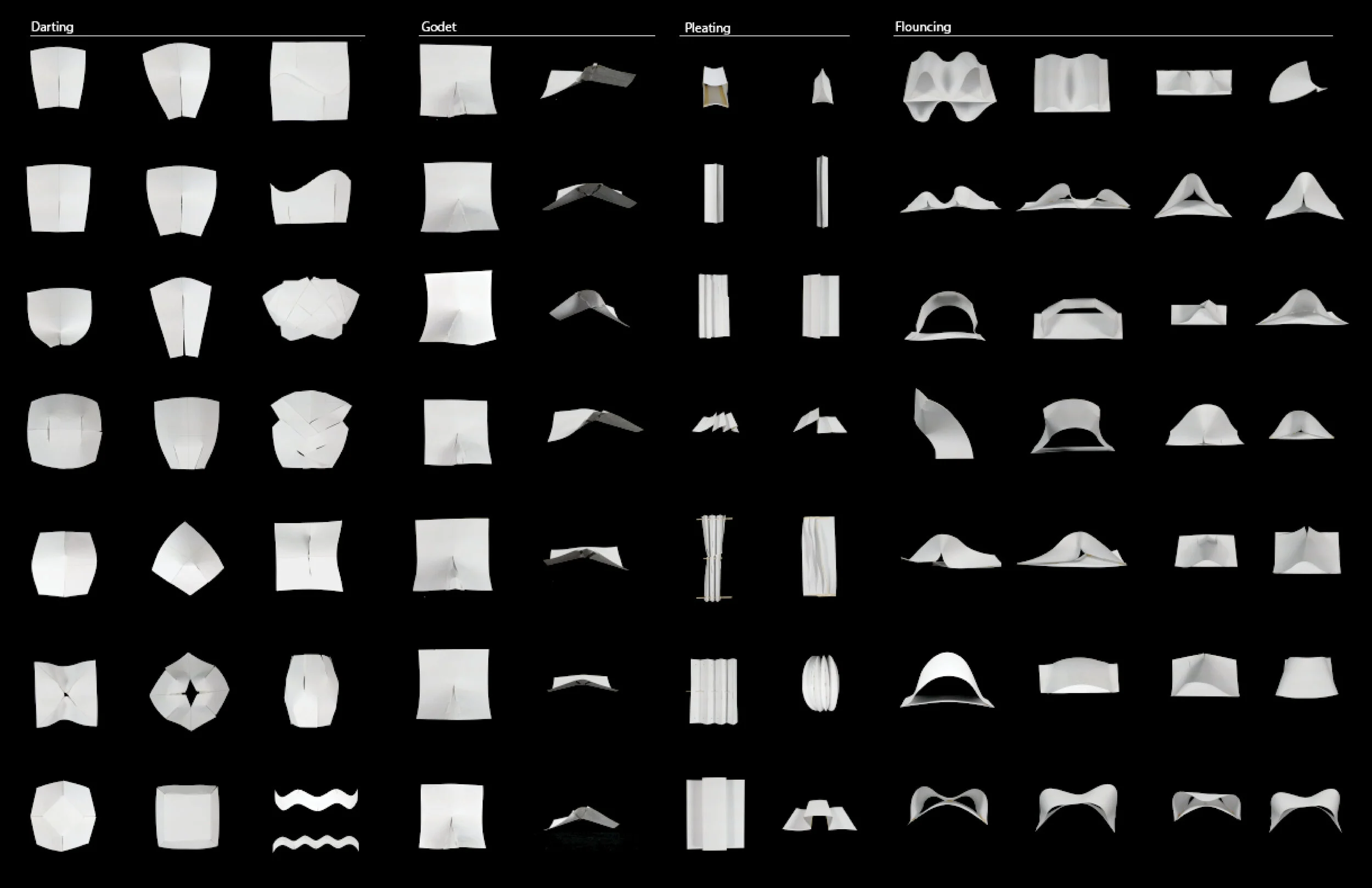
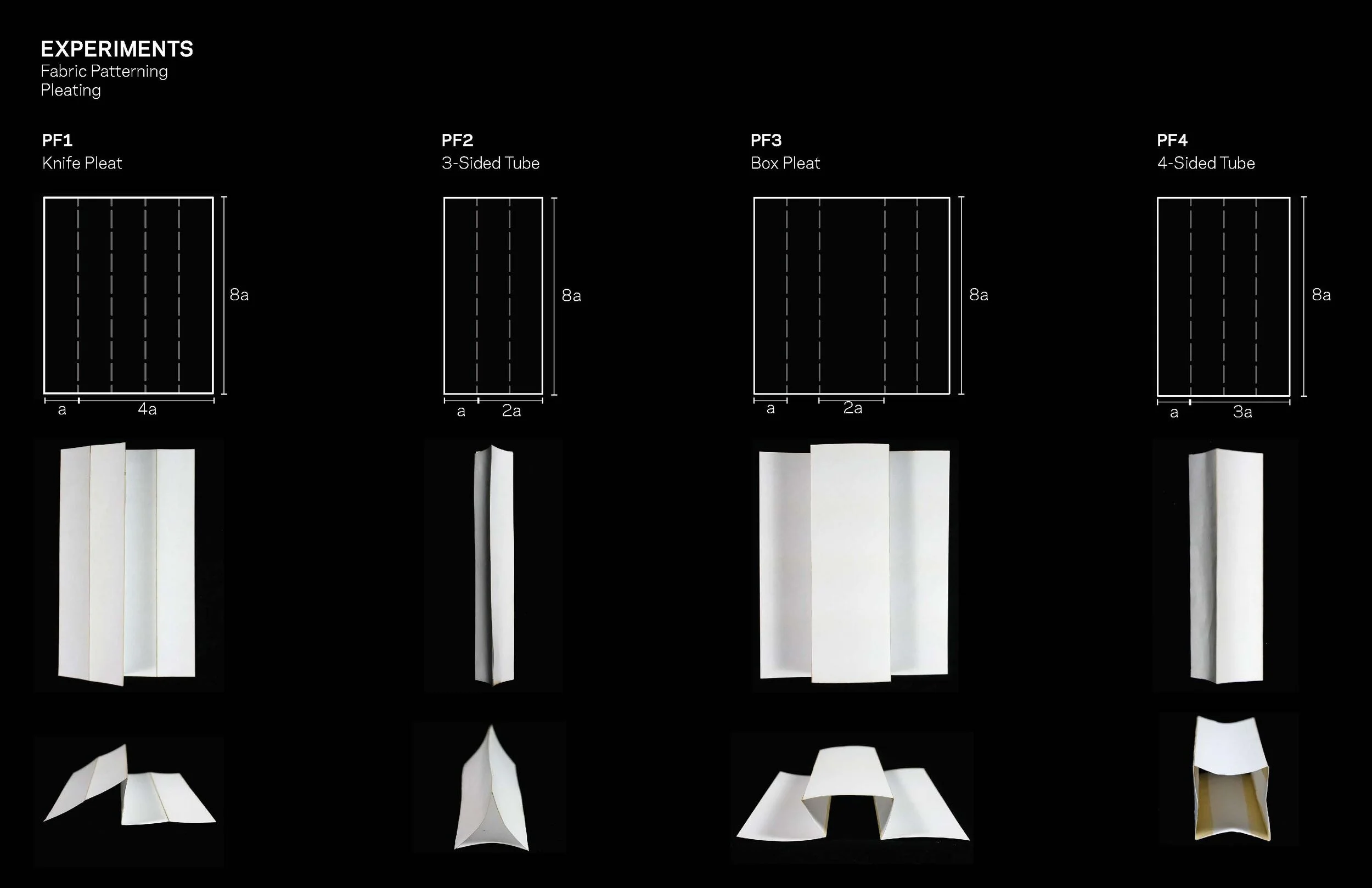
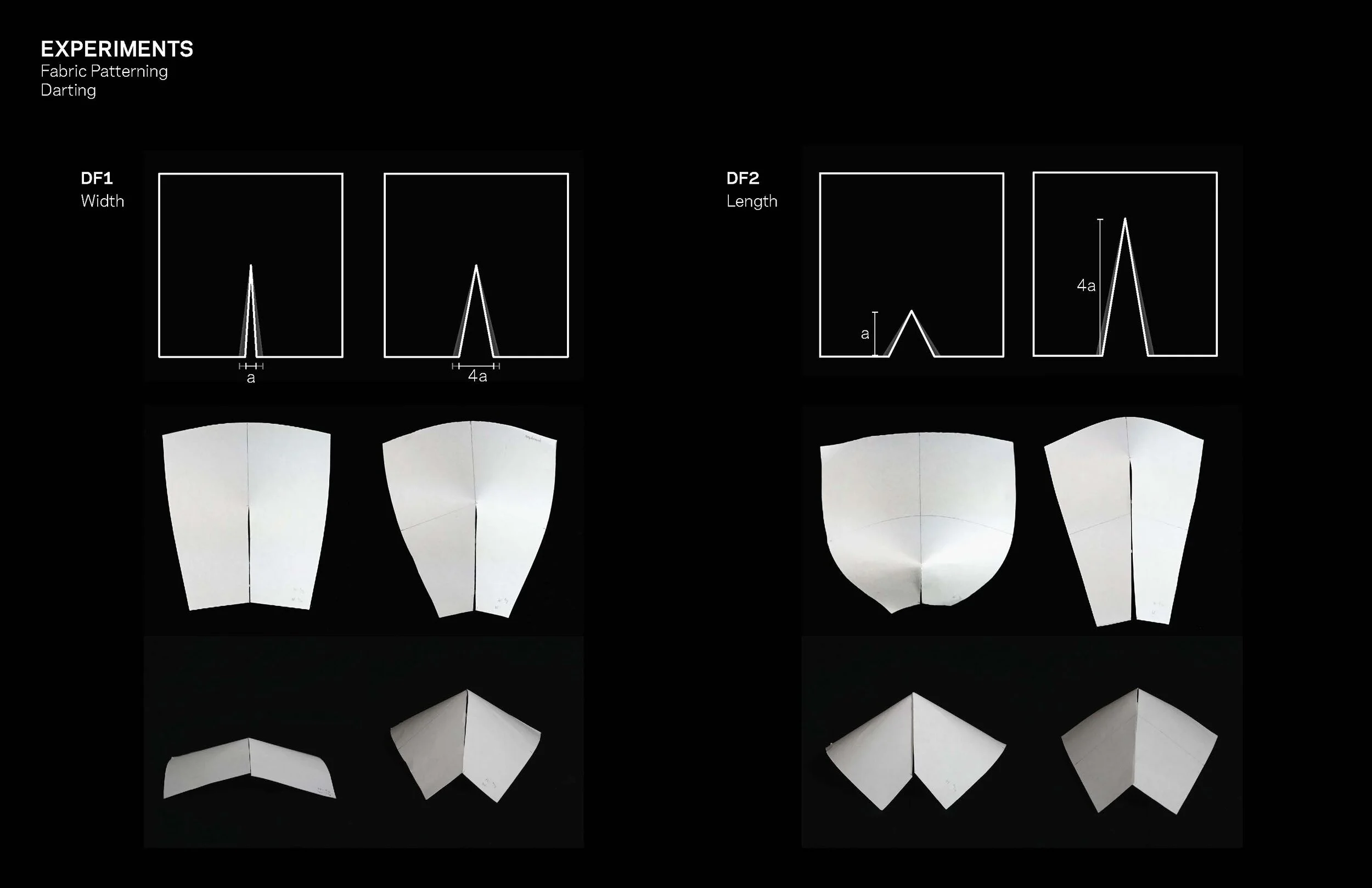
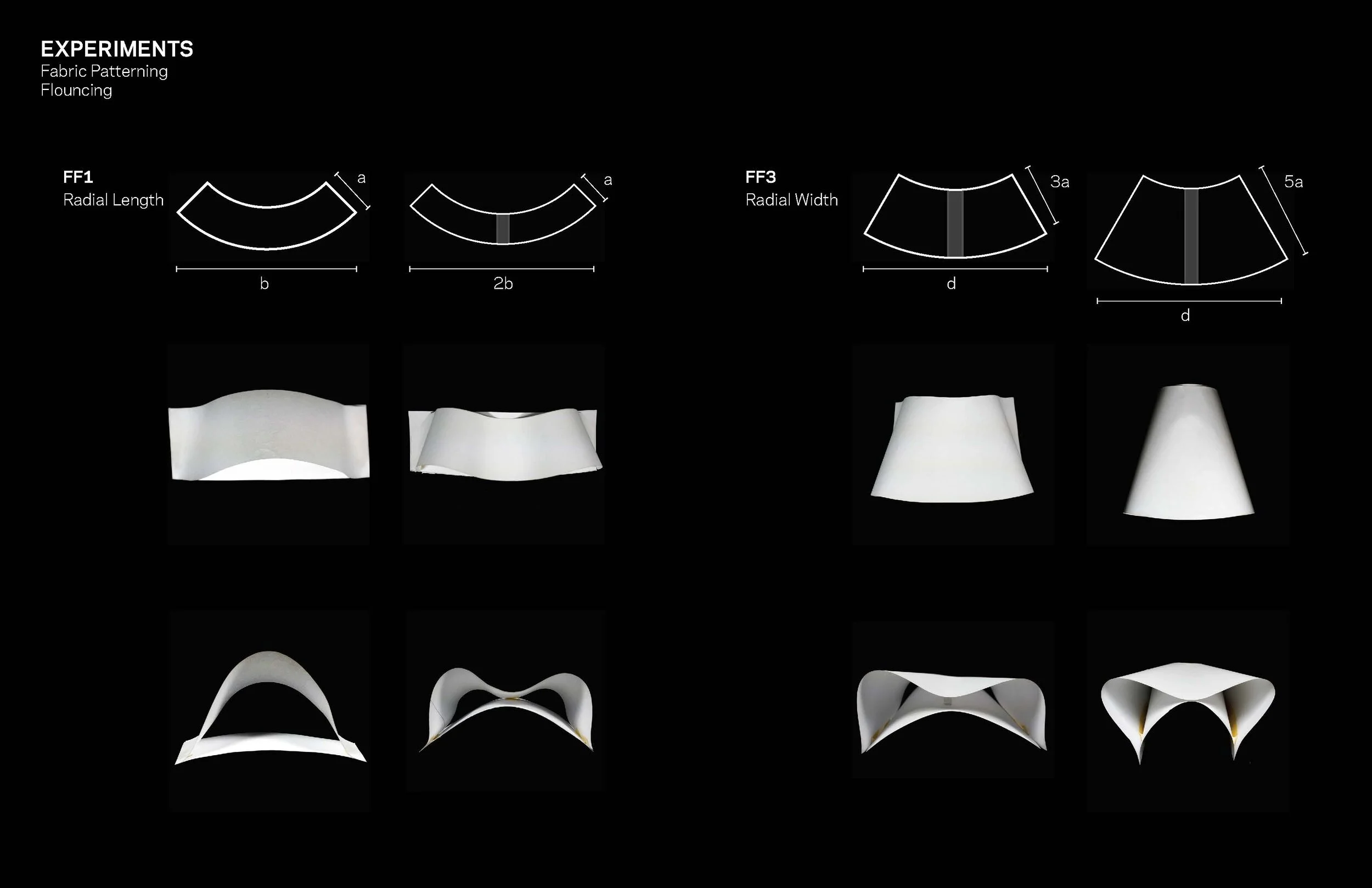
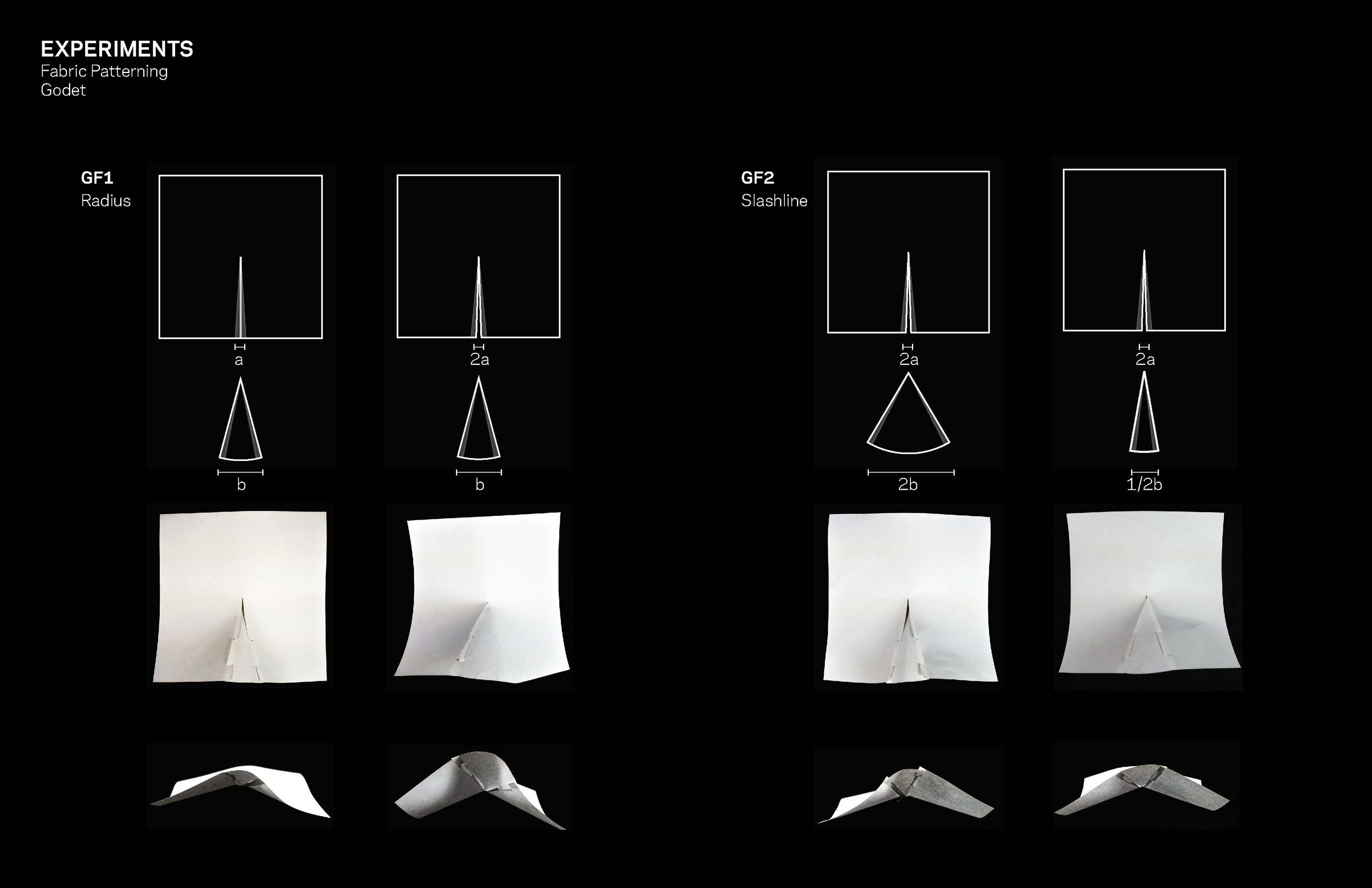
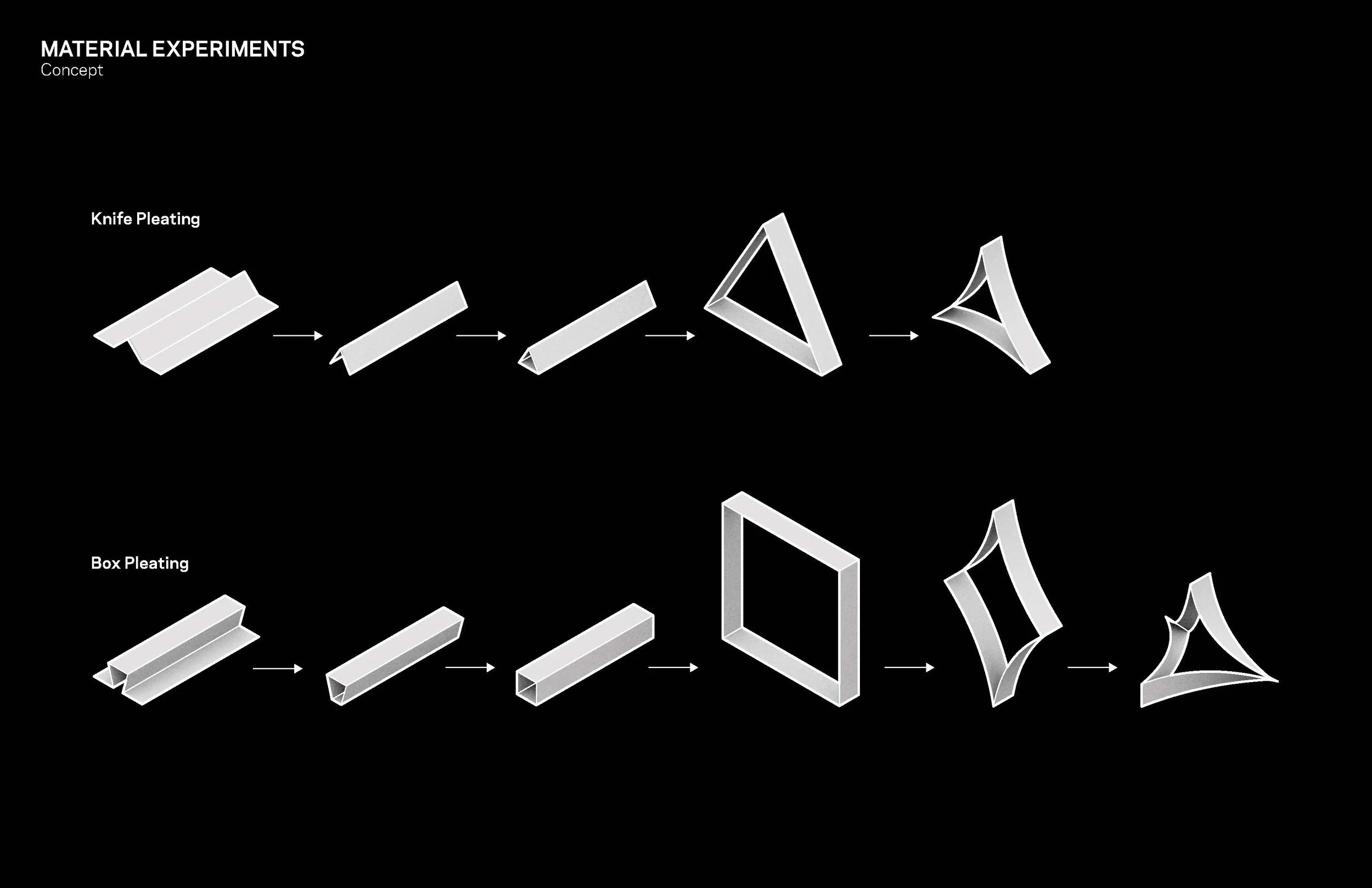
A primary source of inspiration was fabric patterning, a well-established practice that utilizes different methods of folding and joining to create volumetric forms. This creation of three dimensional objects from two dimensional material yielded particularly interesting possibilities for modules that were both spatial and lightweight. Tests were initially conducted with paper to take advantage of its anisotropic bending properties.
CH.02 VENEER STUDIES
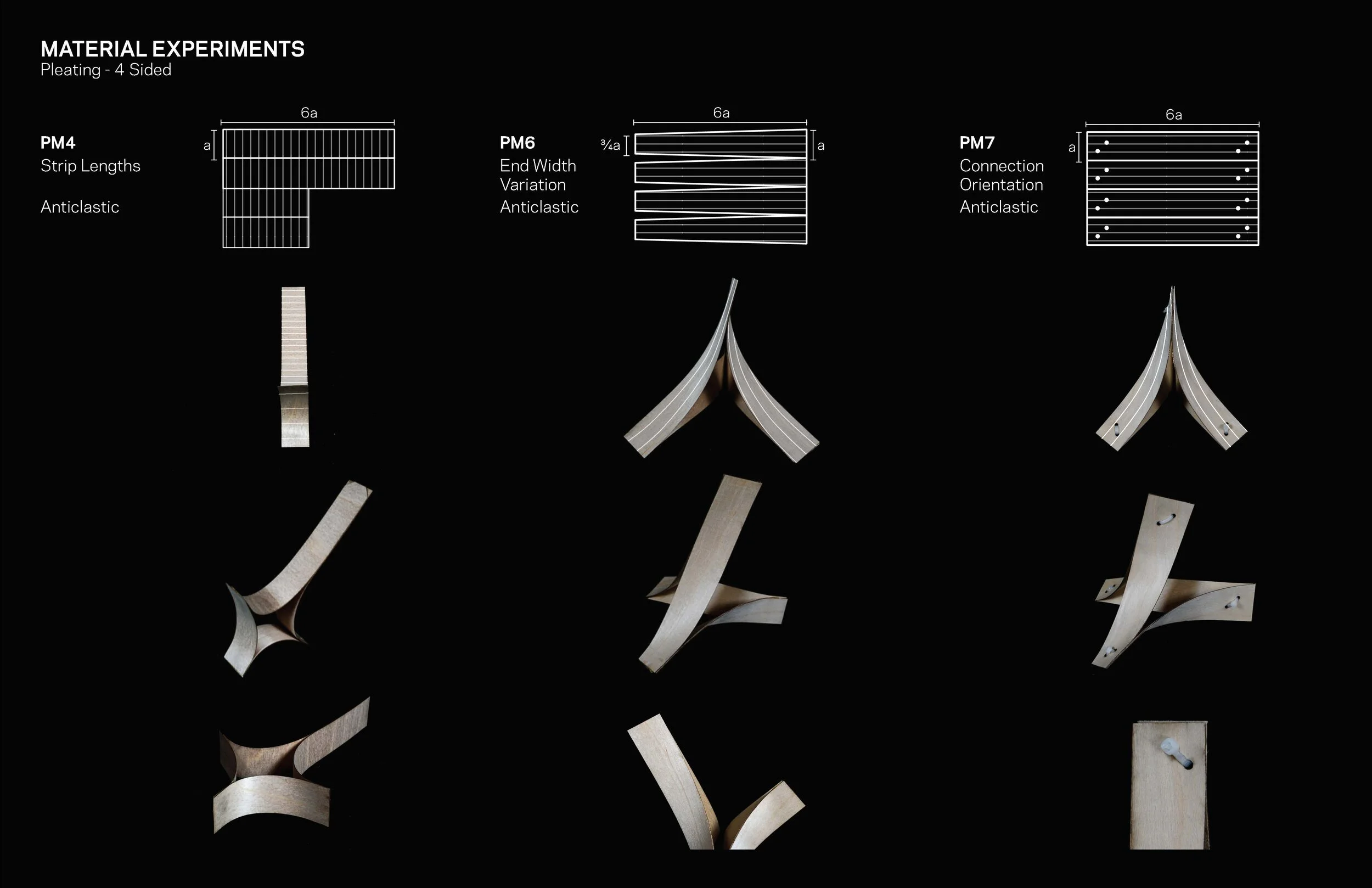
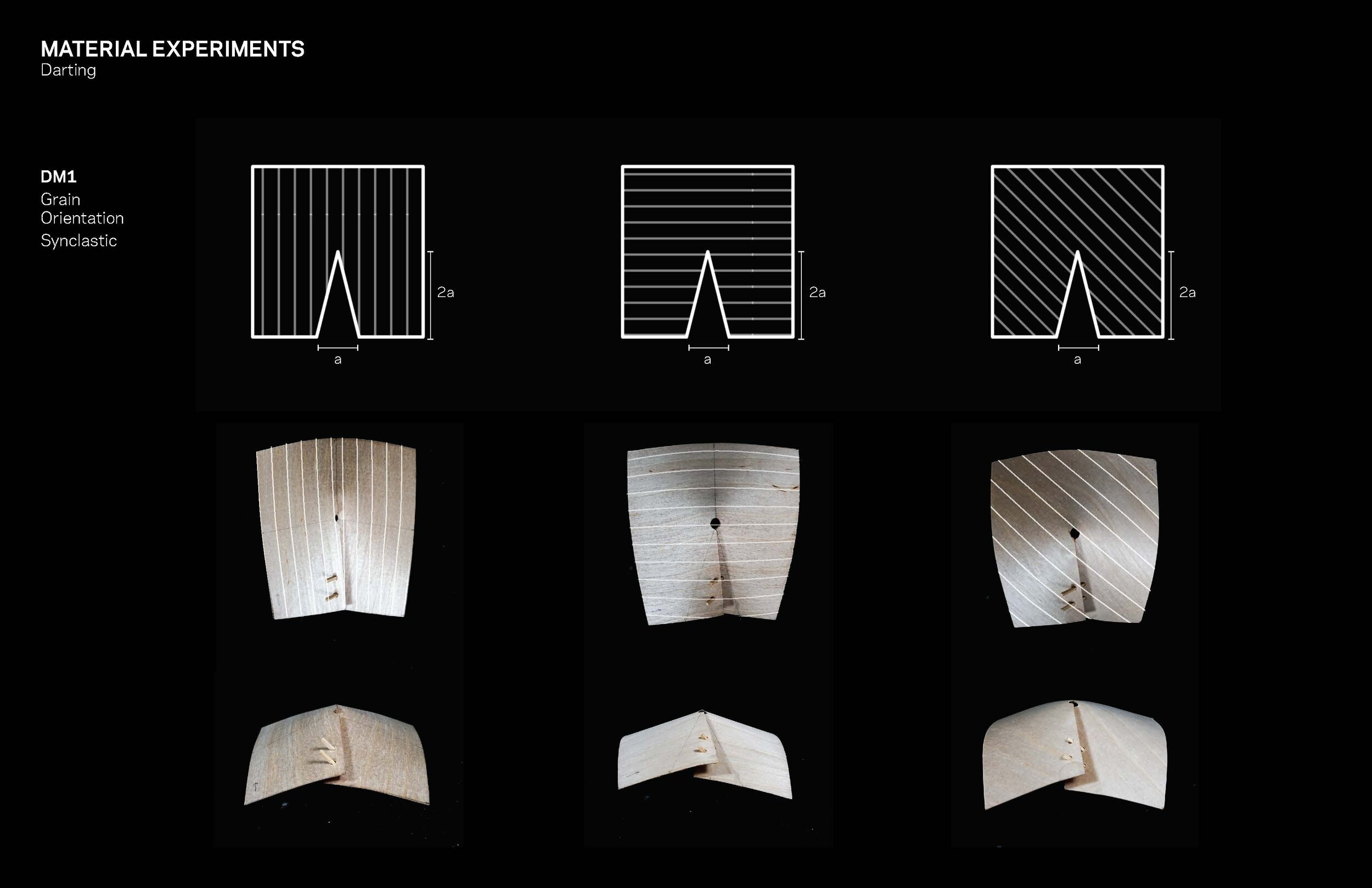
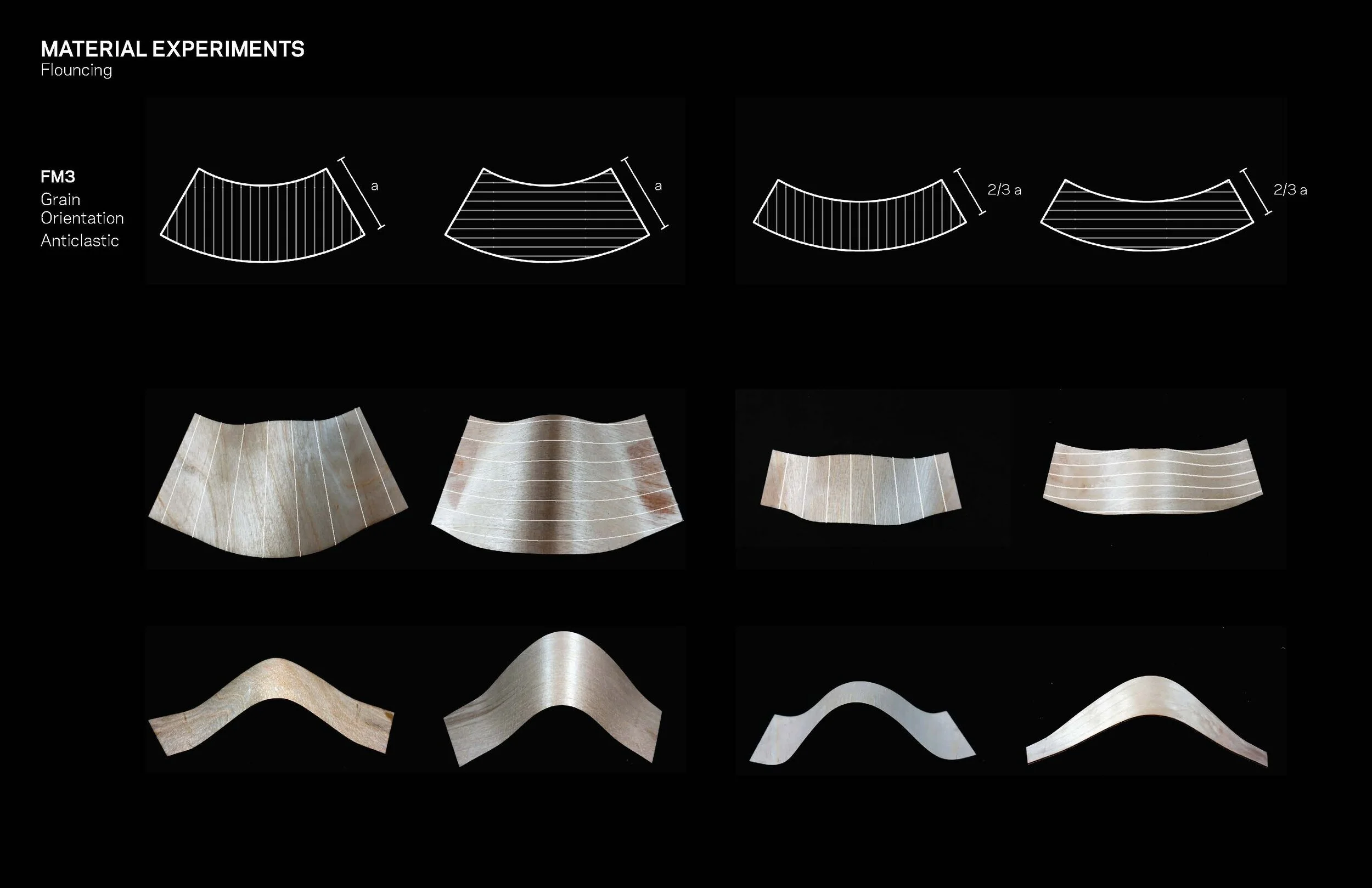
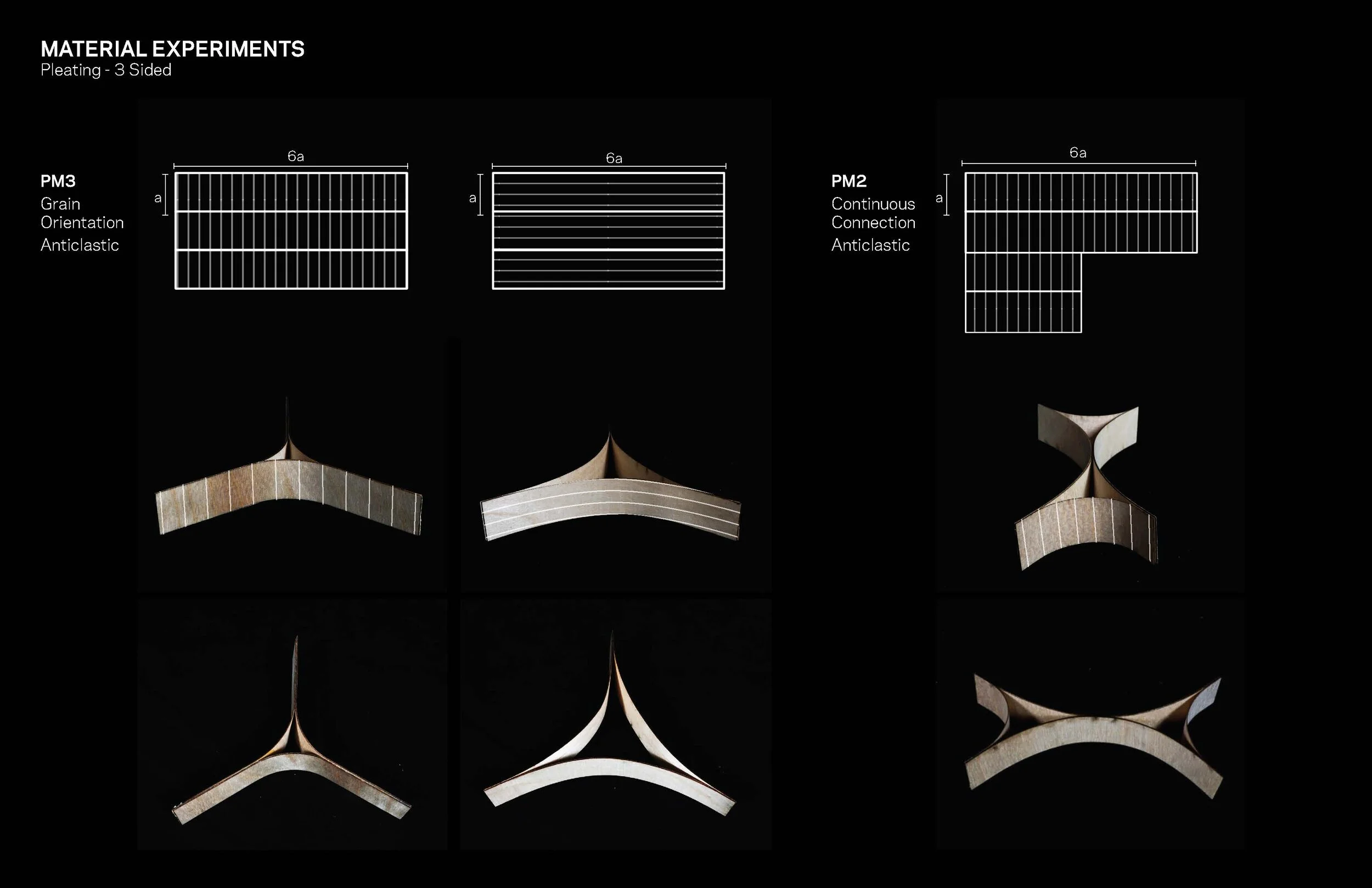
After experimenting in paper, the most promising styles of fabric patterning were tested in 1mm, 3 layer cross-grain maple veneer. Through these experimentations, the pleat was decided upon as the foundation for the final module because of its volumetric properties and potential for parameterization.
CH.03 PLYWOOD STUDIES
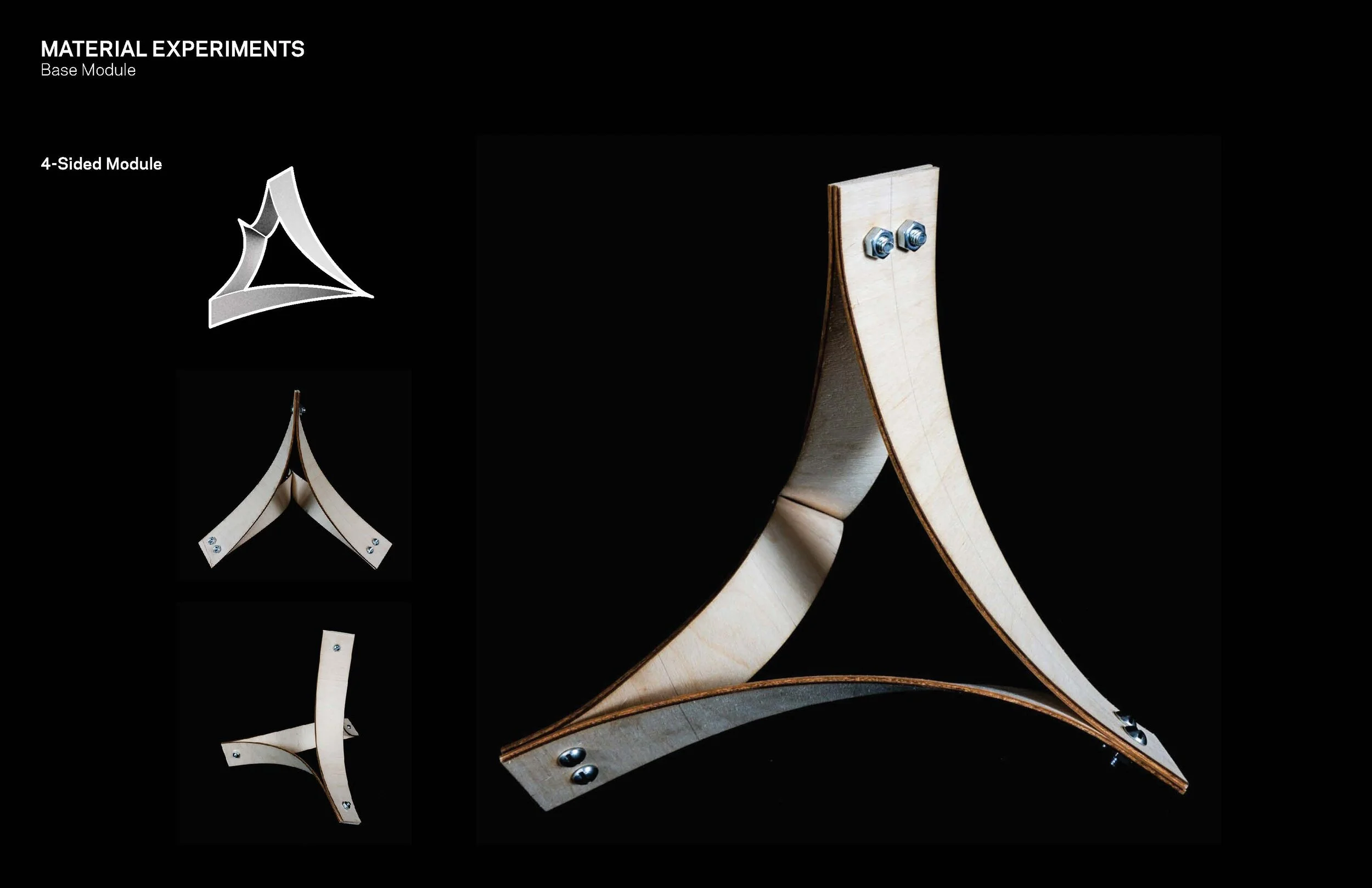
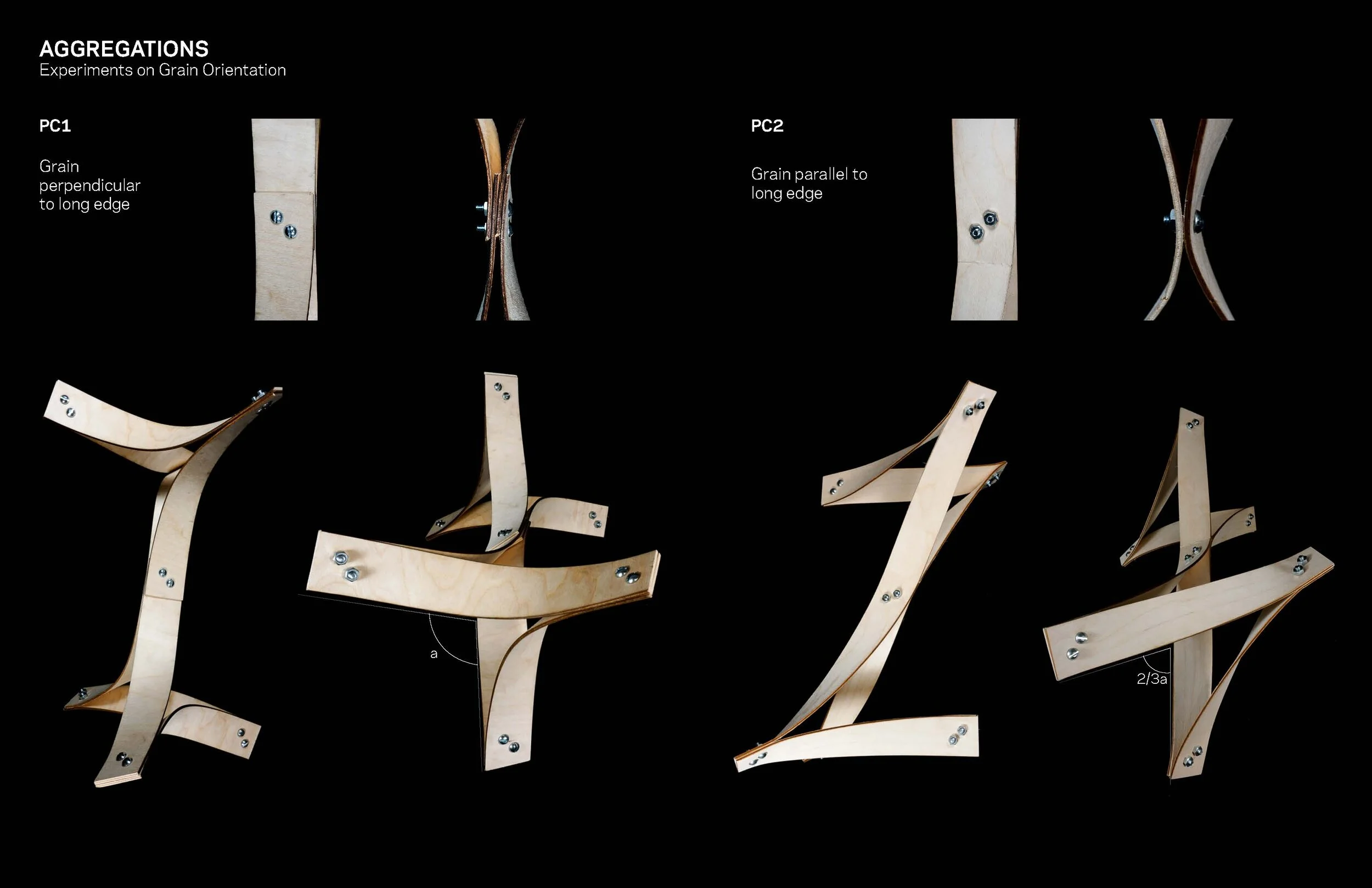
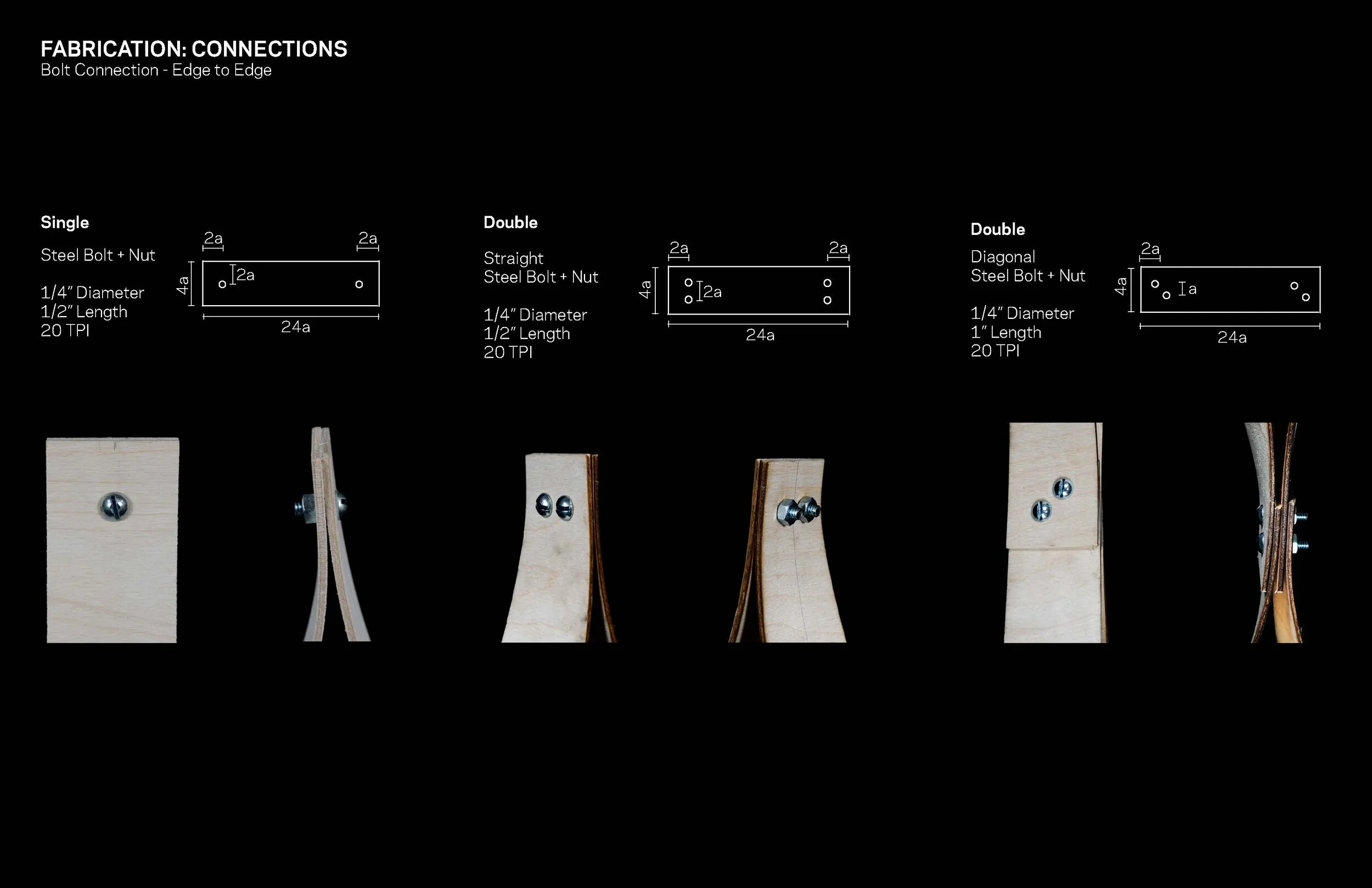
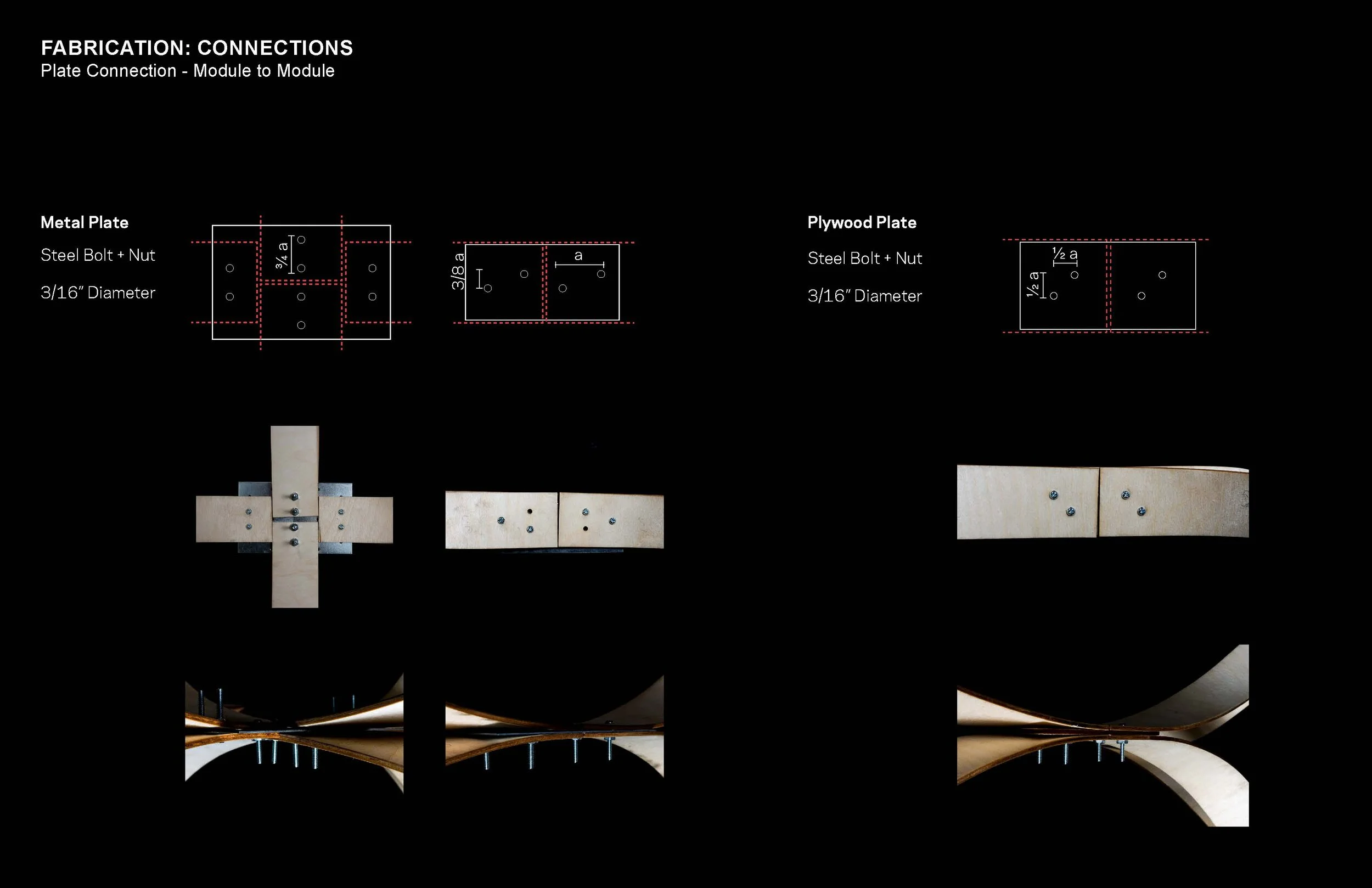
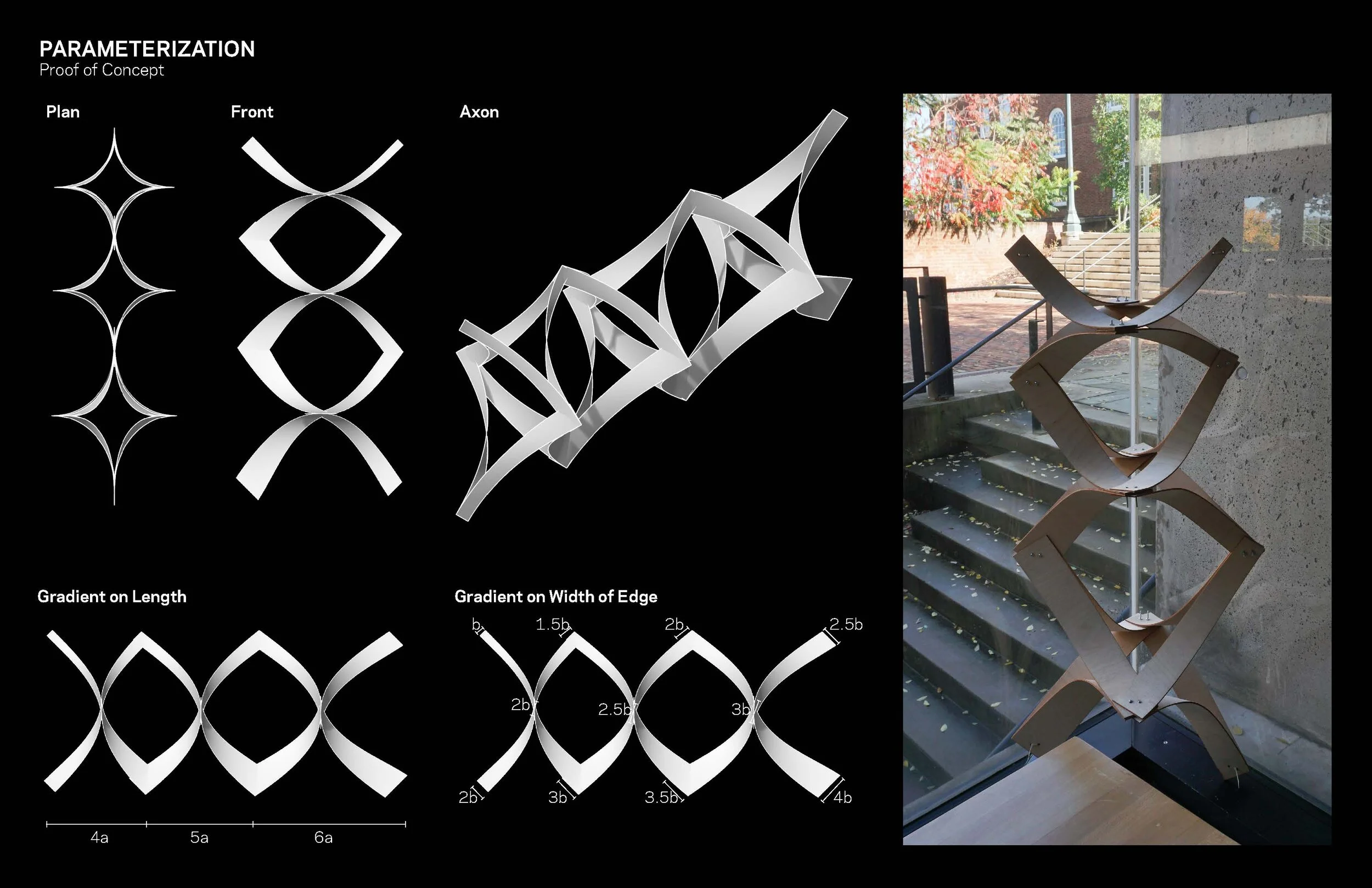
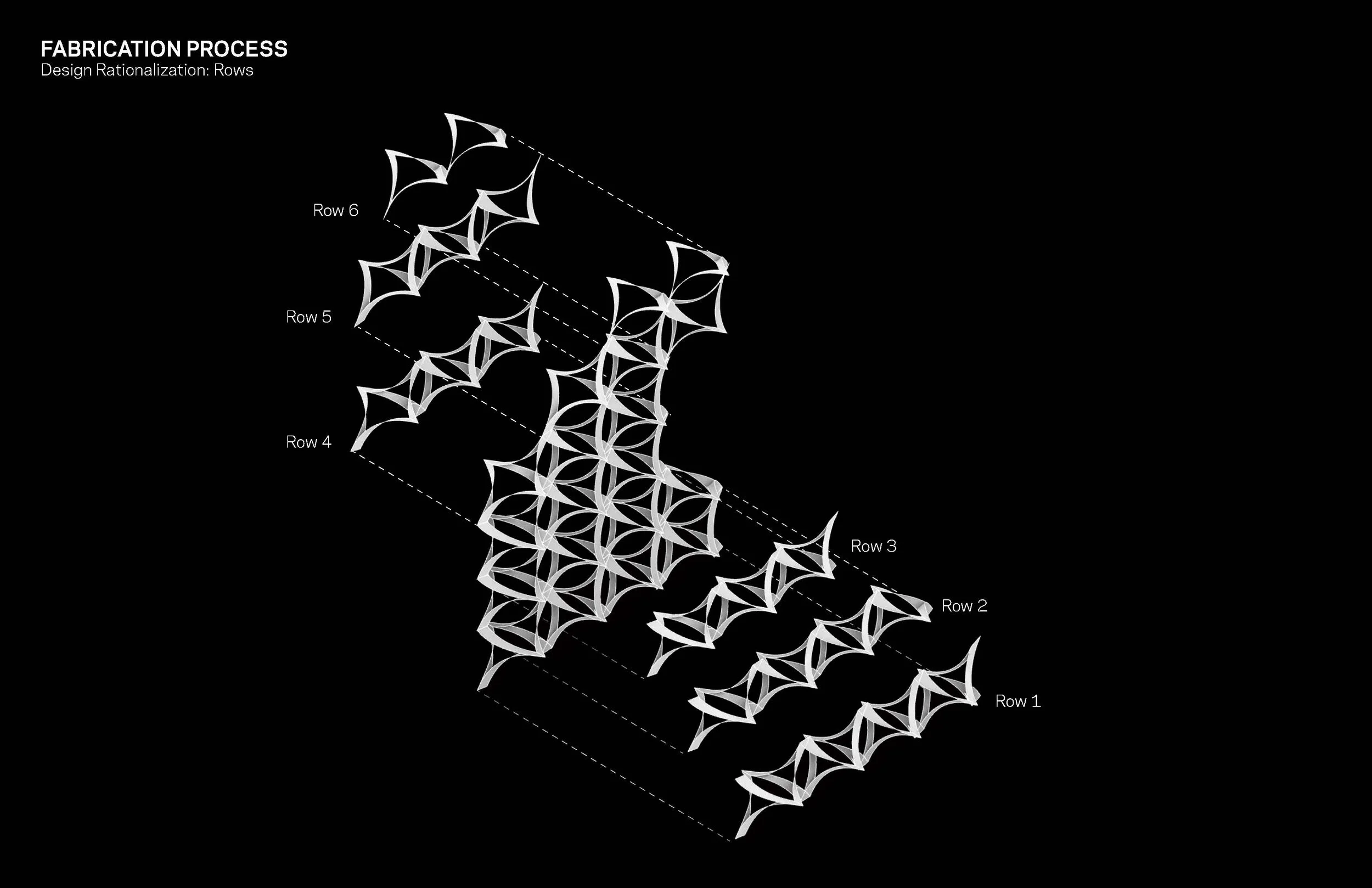
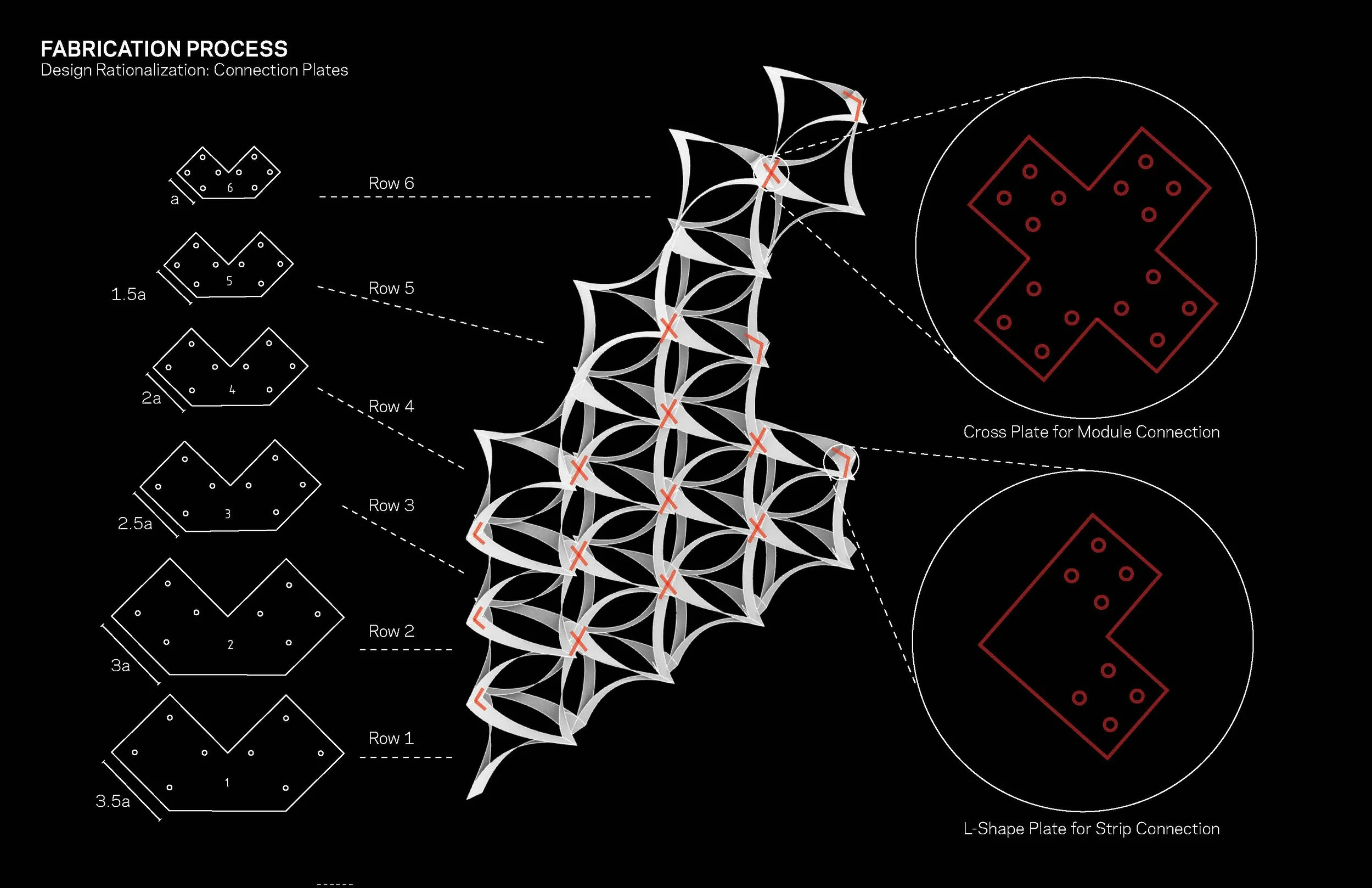
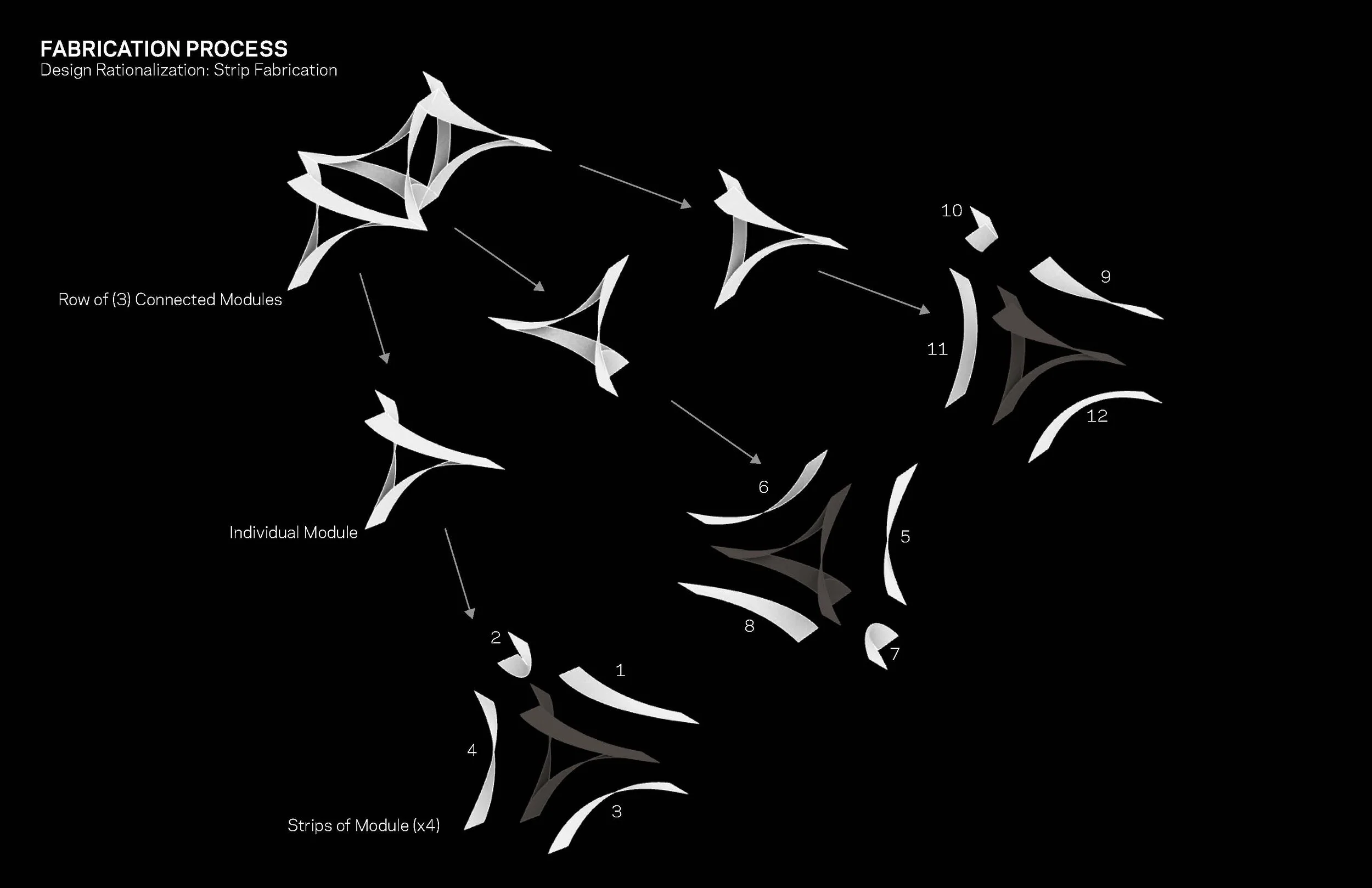
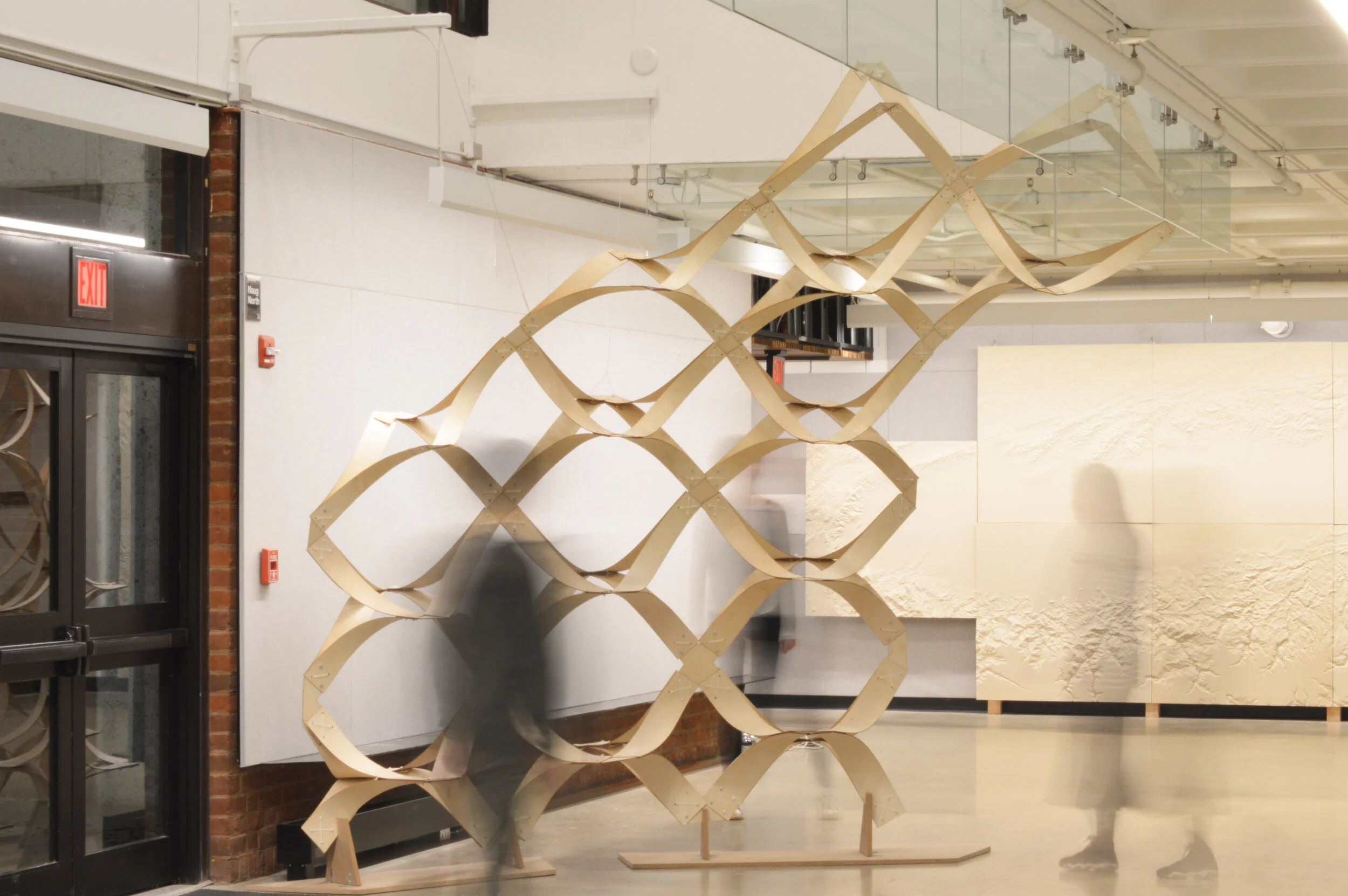
Within the final design, the module is formed from a four-sided pleat connection of 3mm cross-grain birch plywood strips. This module is then torqued into an anticlastic curve that allows for aggregation in multiple directions. When aggregated, the result is a flexible surface of both solid and void, capable of assuming forms that define space and wrap its occupants. Connections between aggregations were tested, resulting in moving forward with a plywood plate connection.
CH. 04 MODULE PARAMETERIZATION
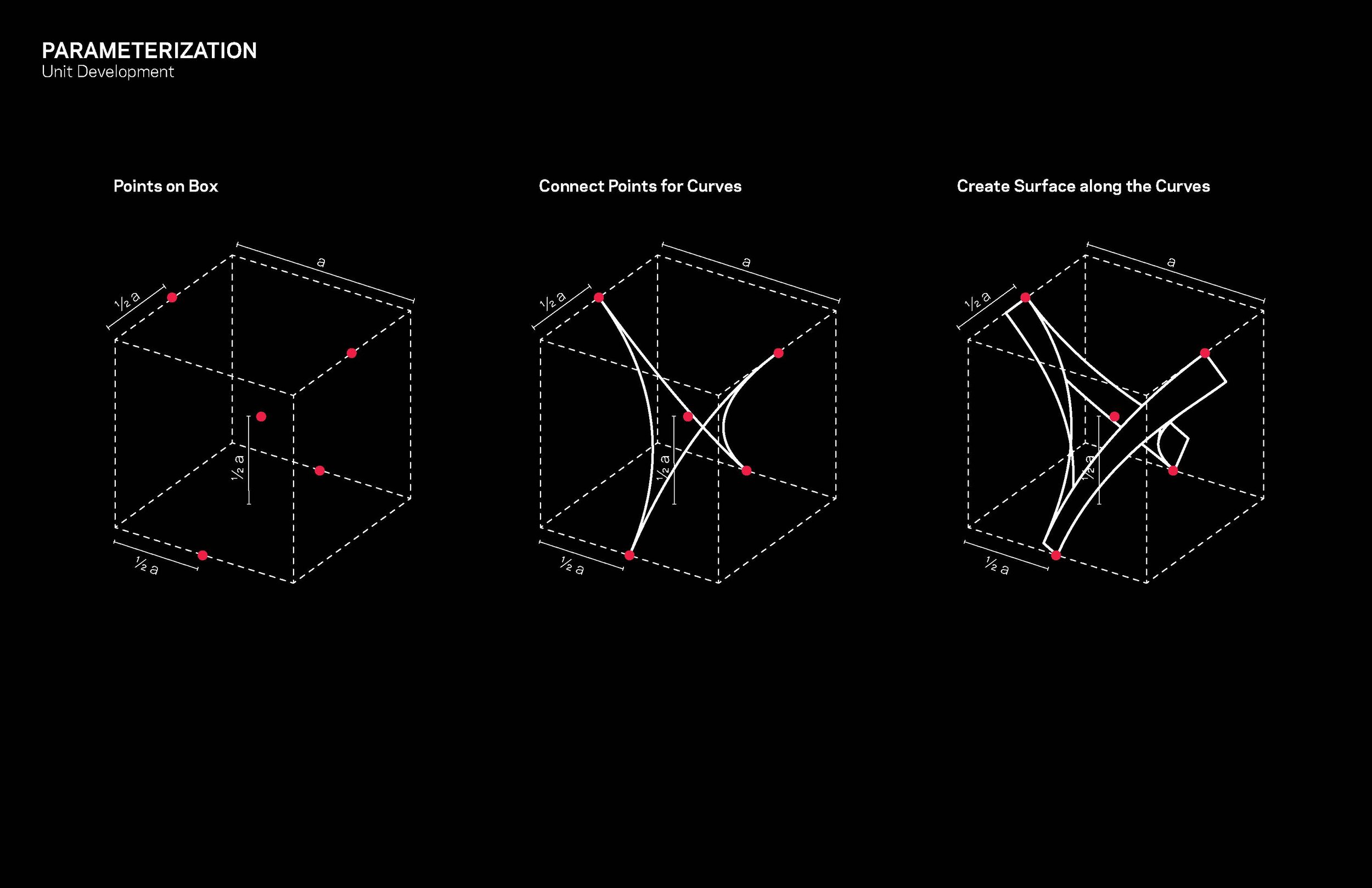
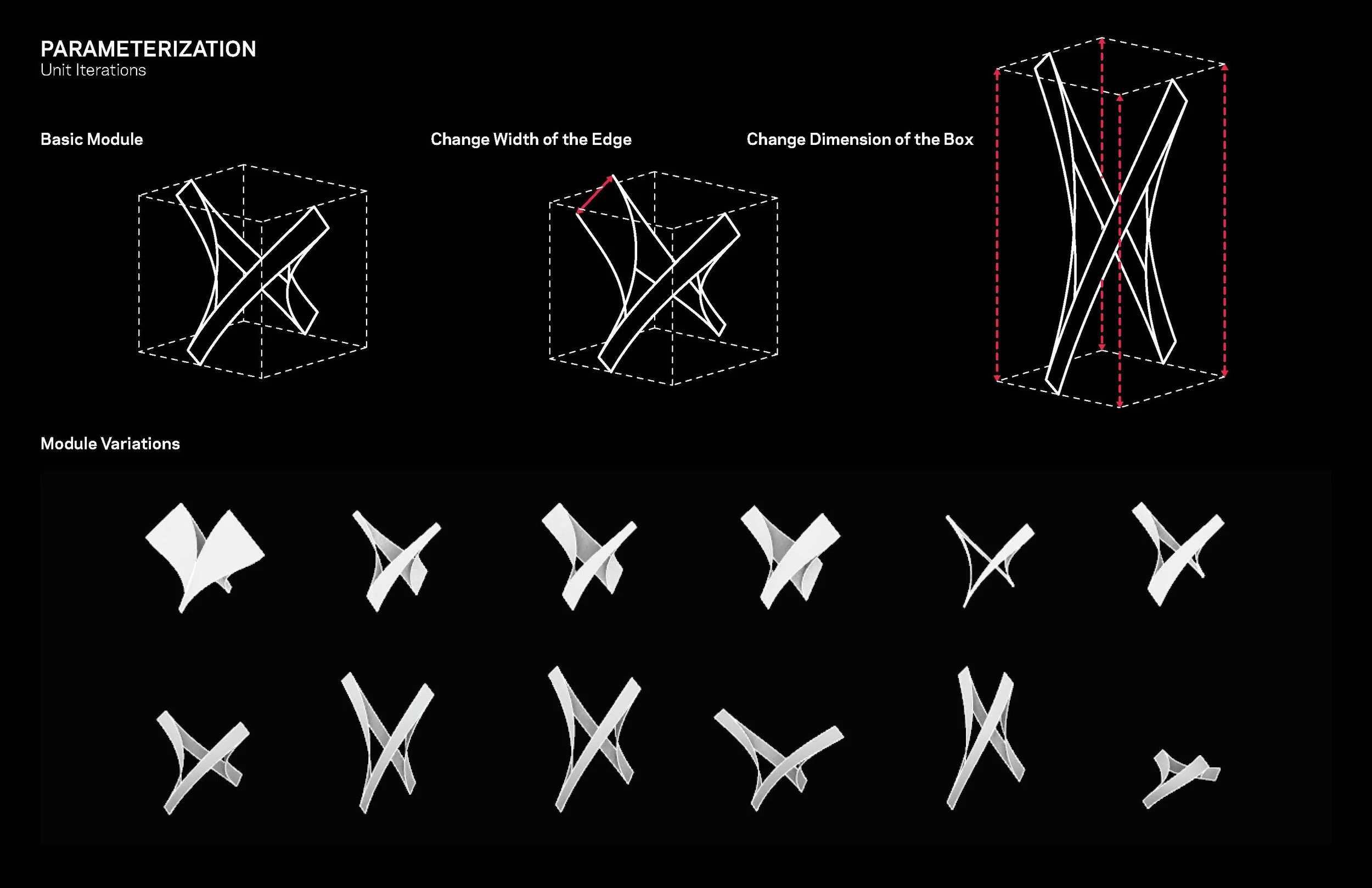
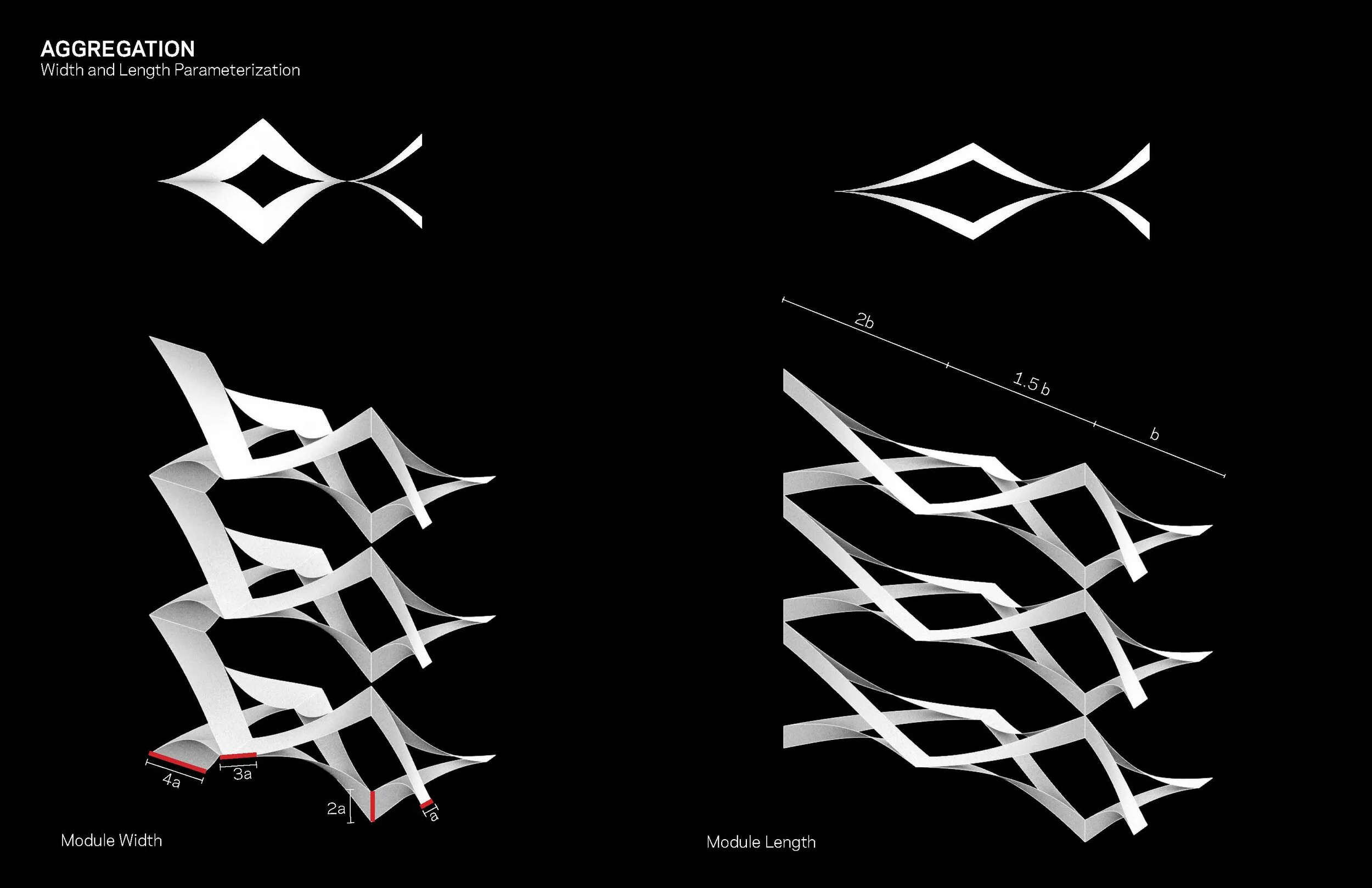
Digital modeling was just as crucial to our project as physical experimentation. We began with parameterizing the module, and using our independently developed scripts we were able to manipulate both the length and width of each strip of a module.
CH. 05 AGGREGATION PARAMETERIZATION
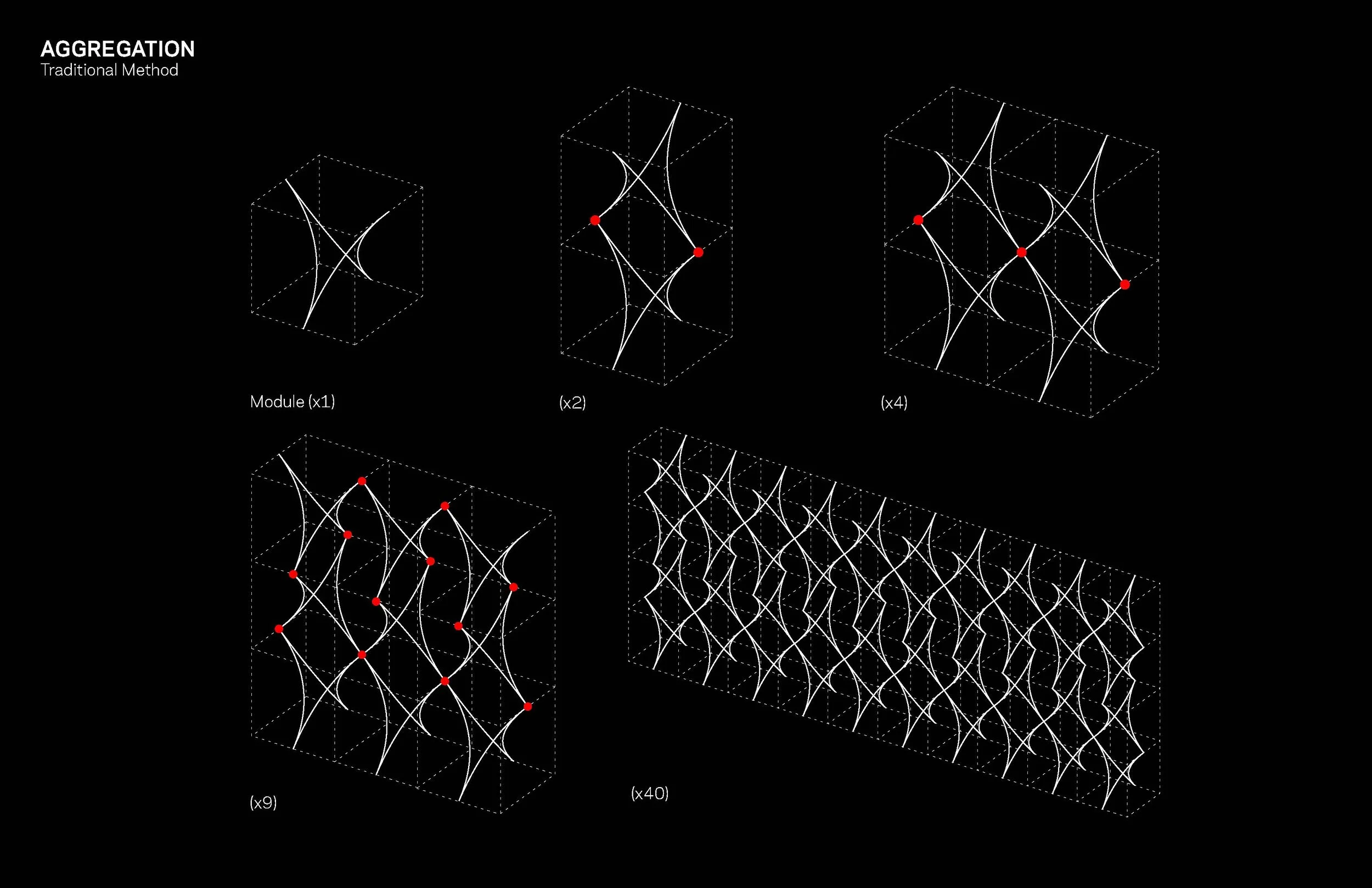
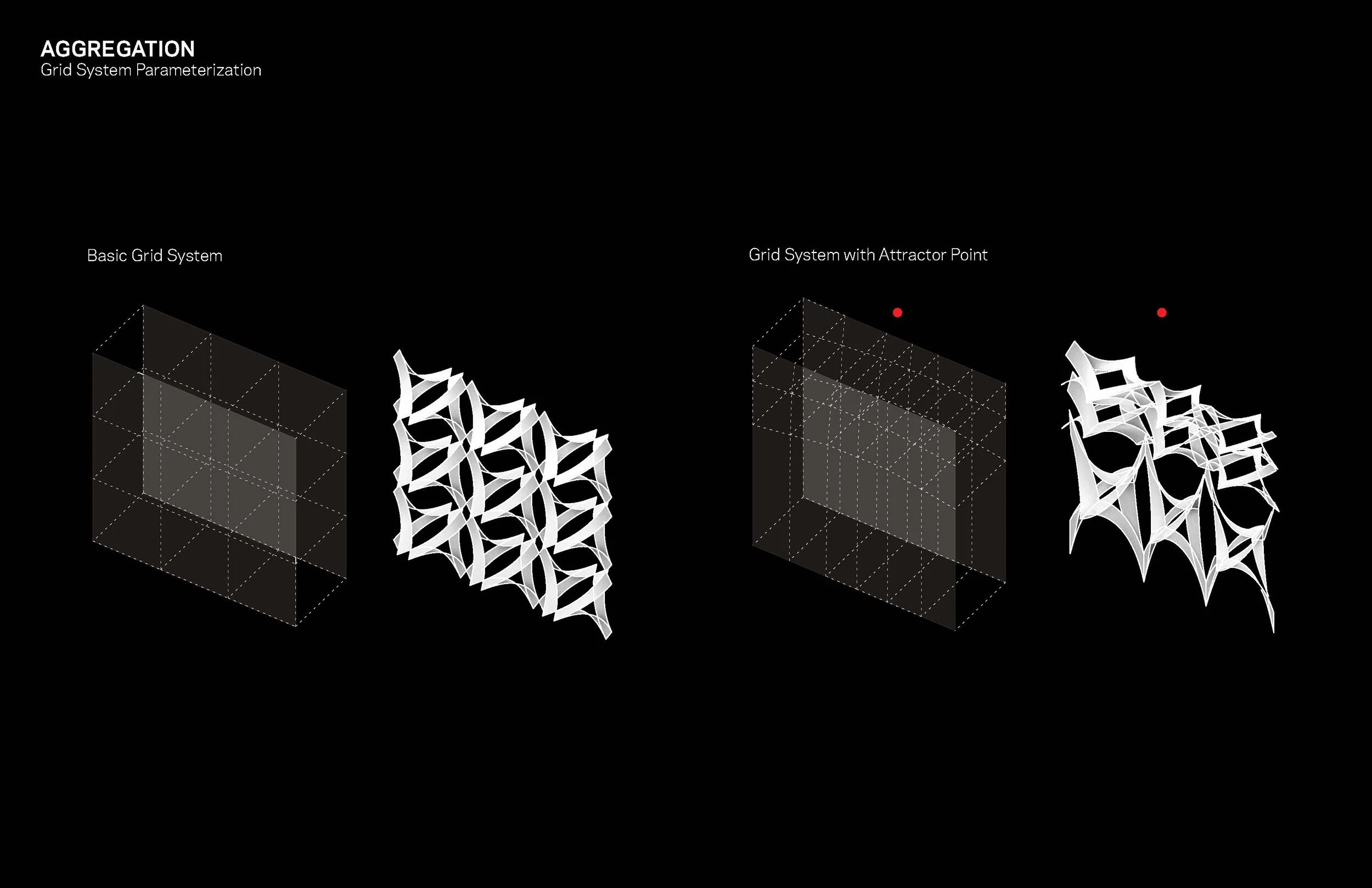
We then applied this method of parameterization to aggregations of the module.
CH. 06 FINAL STRUCTURE
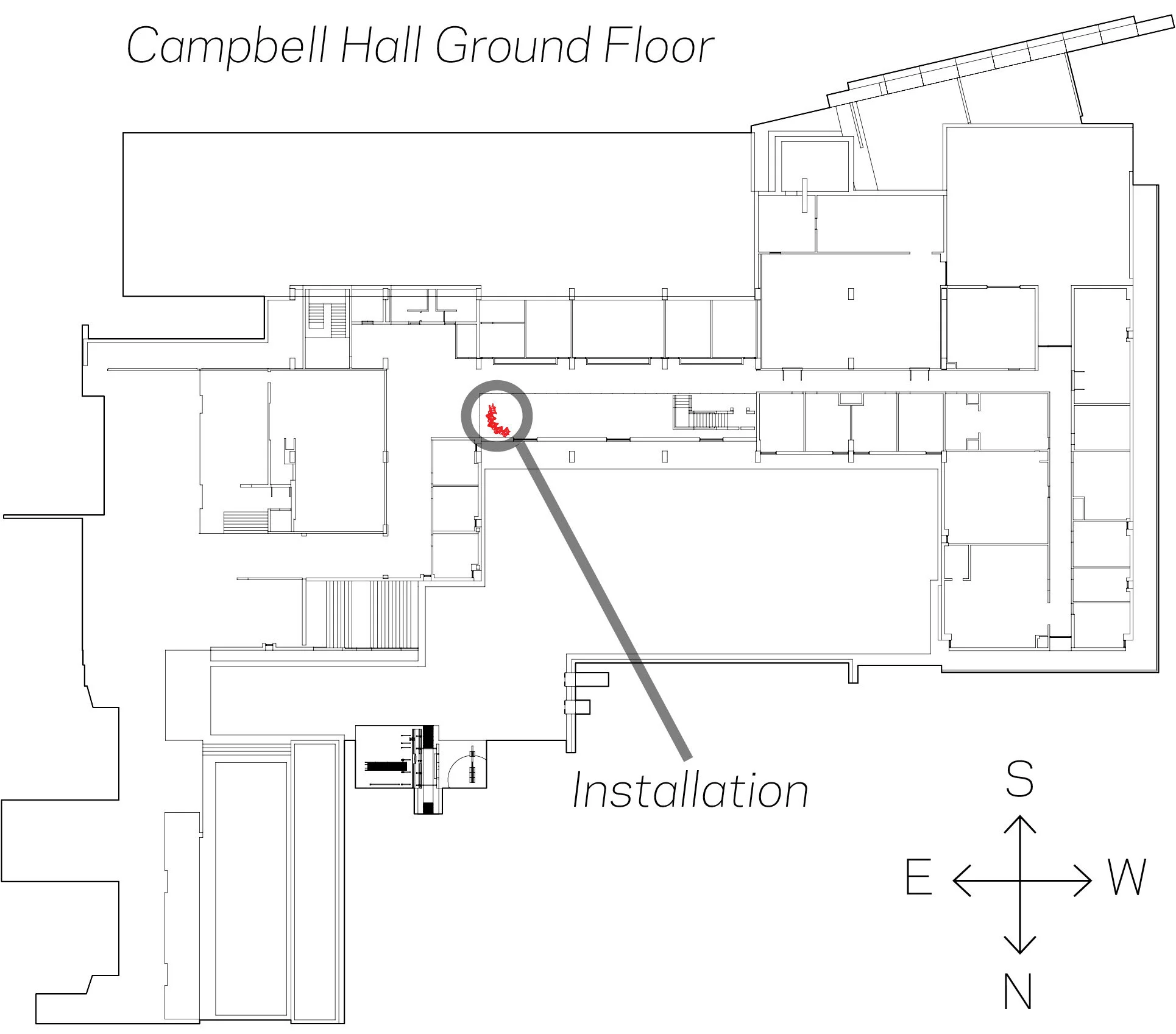
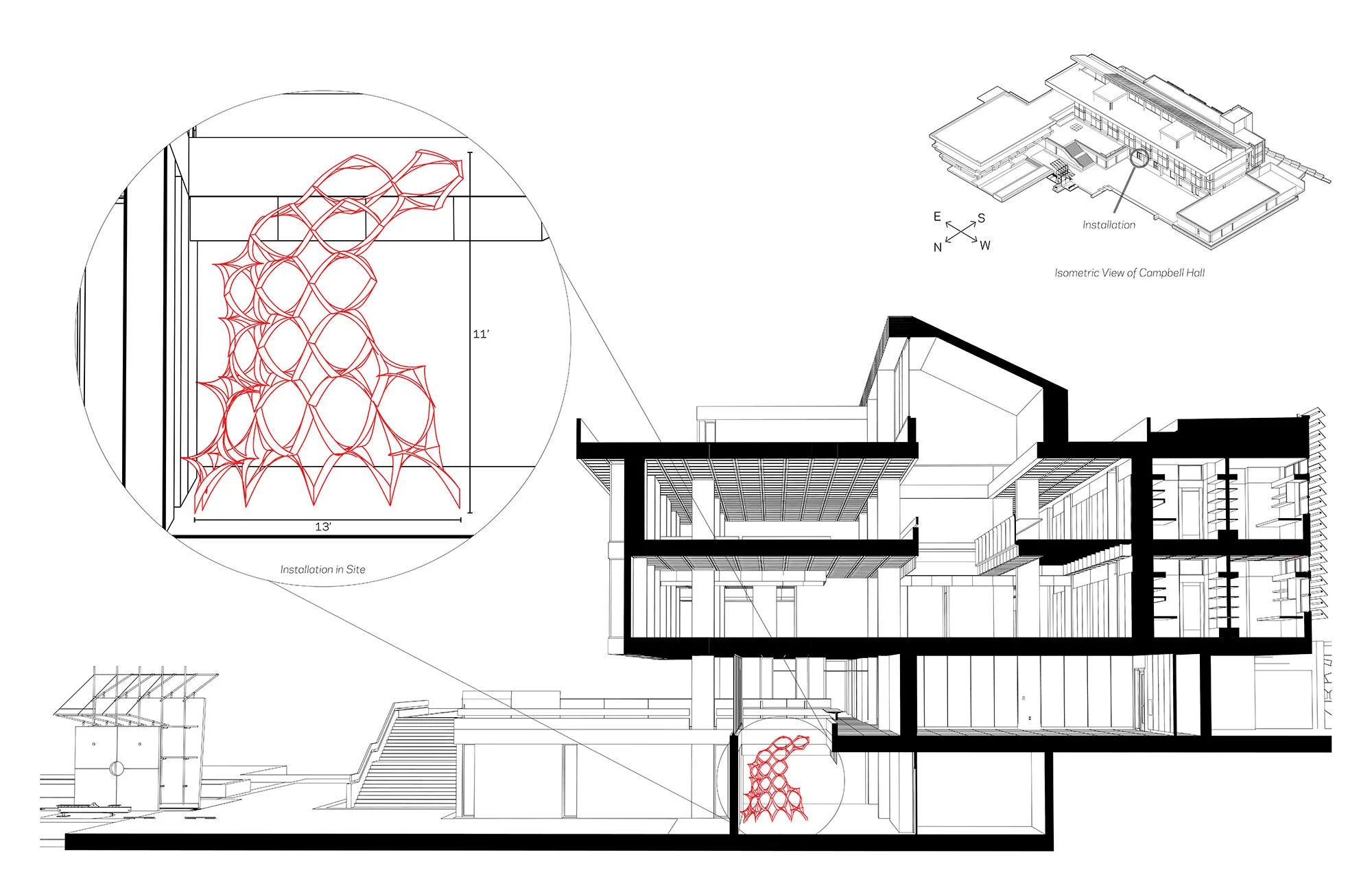
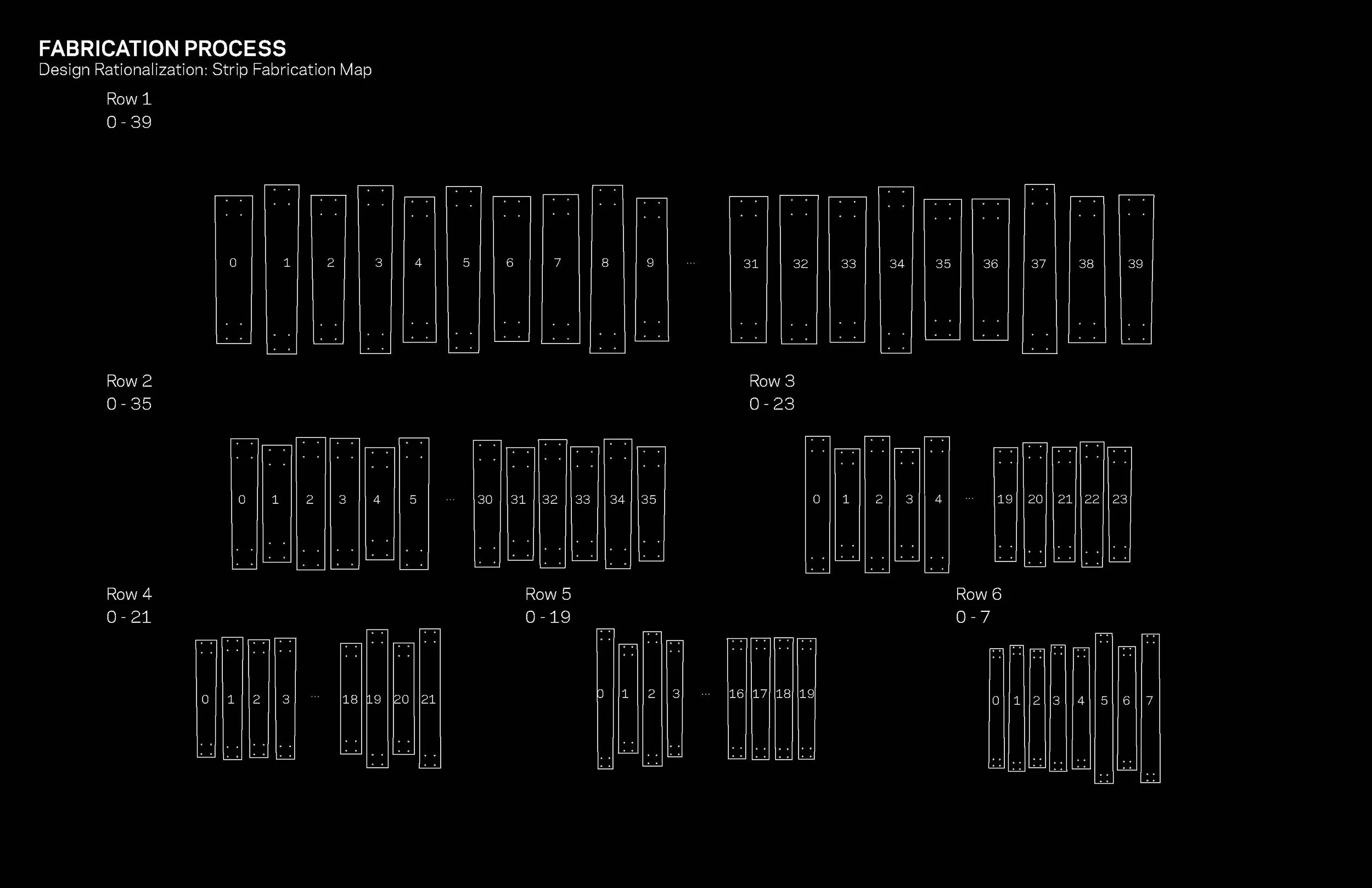
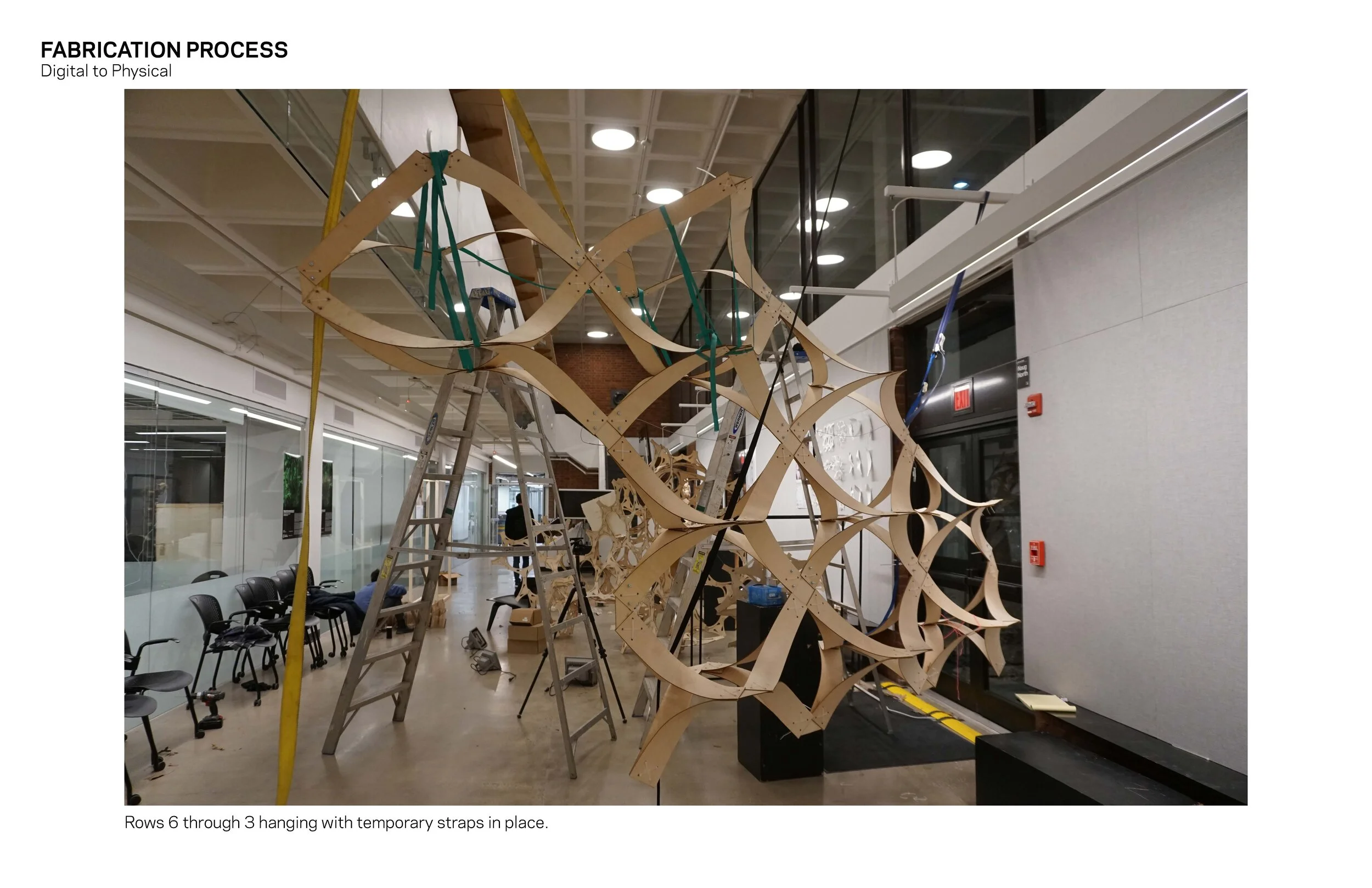
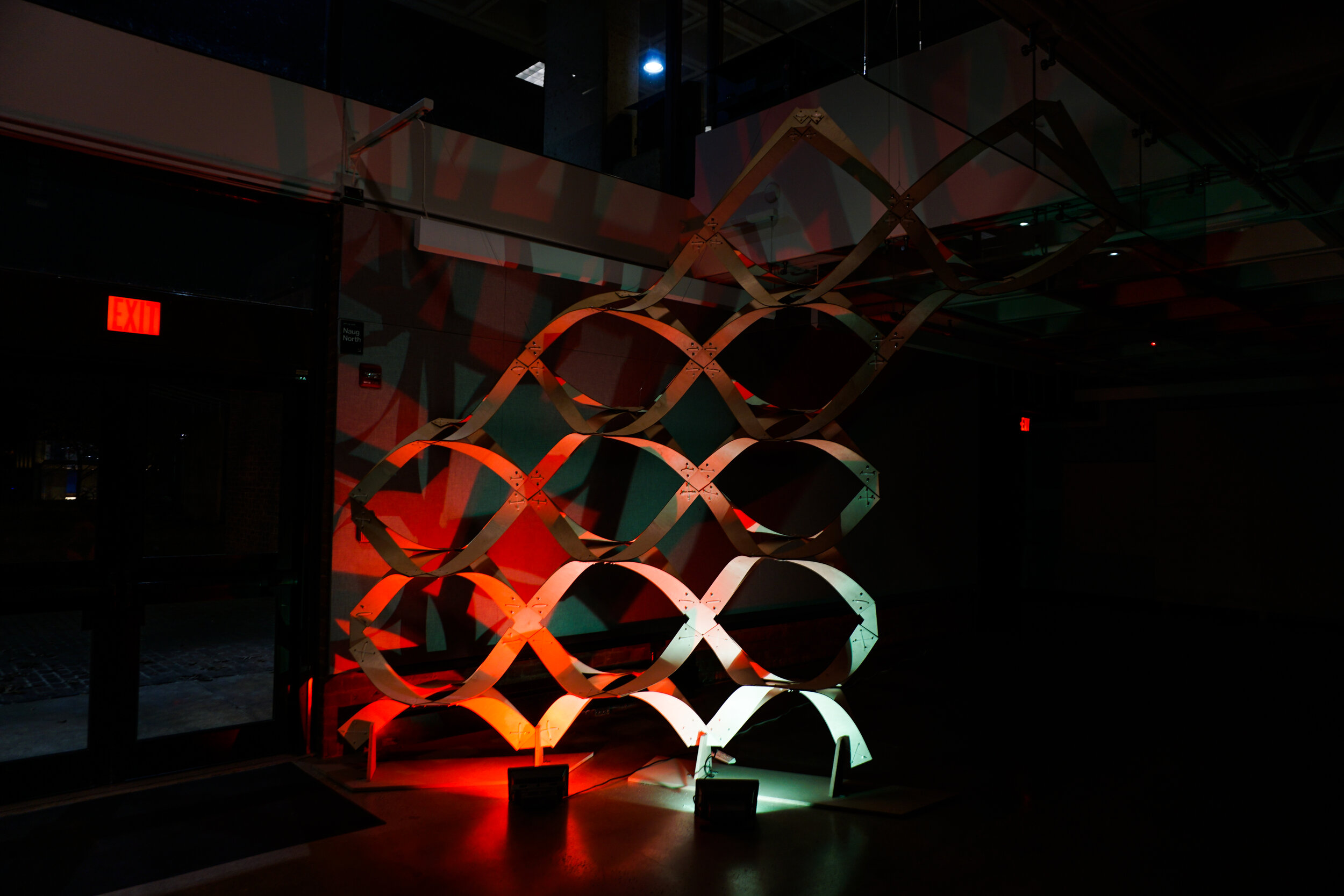
The design and fabrication of the final structure combined both physical and digital developments we made through earlier studies. Located in a double height entrance area, the structure can be seen from above via a balcony and has interaction with those coming and going. An attractor point was located at the structure’s peak, resulting in a design with thicker and longer modules near the ground connection, and shorter, skinnier modules near the second floor. Each module strip is completely unique and was calculated using our digital parametrization process.
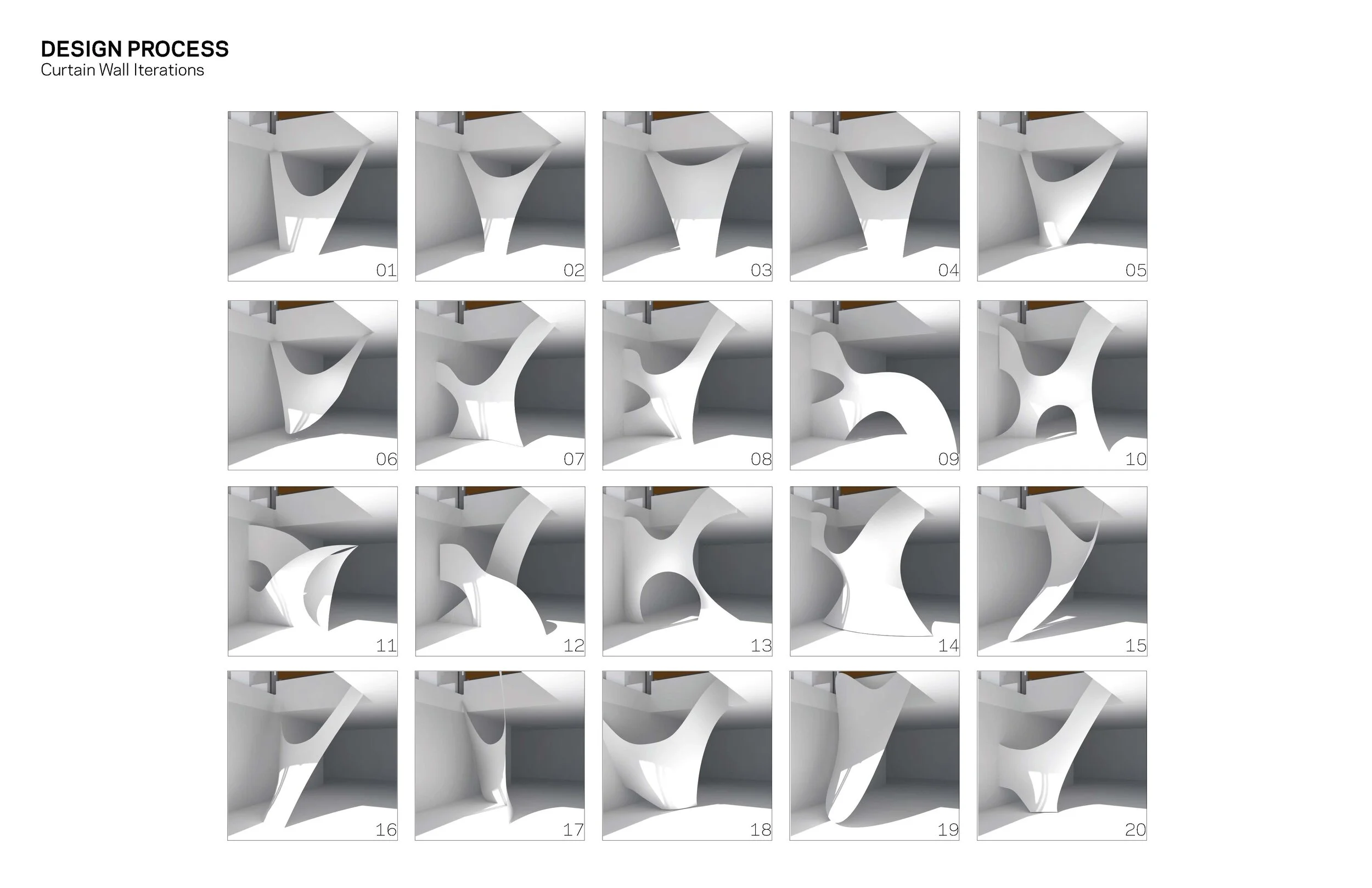
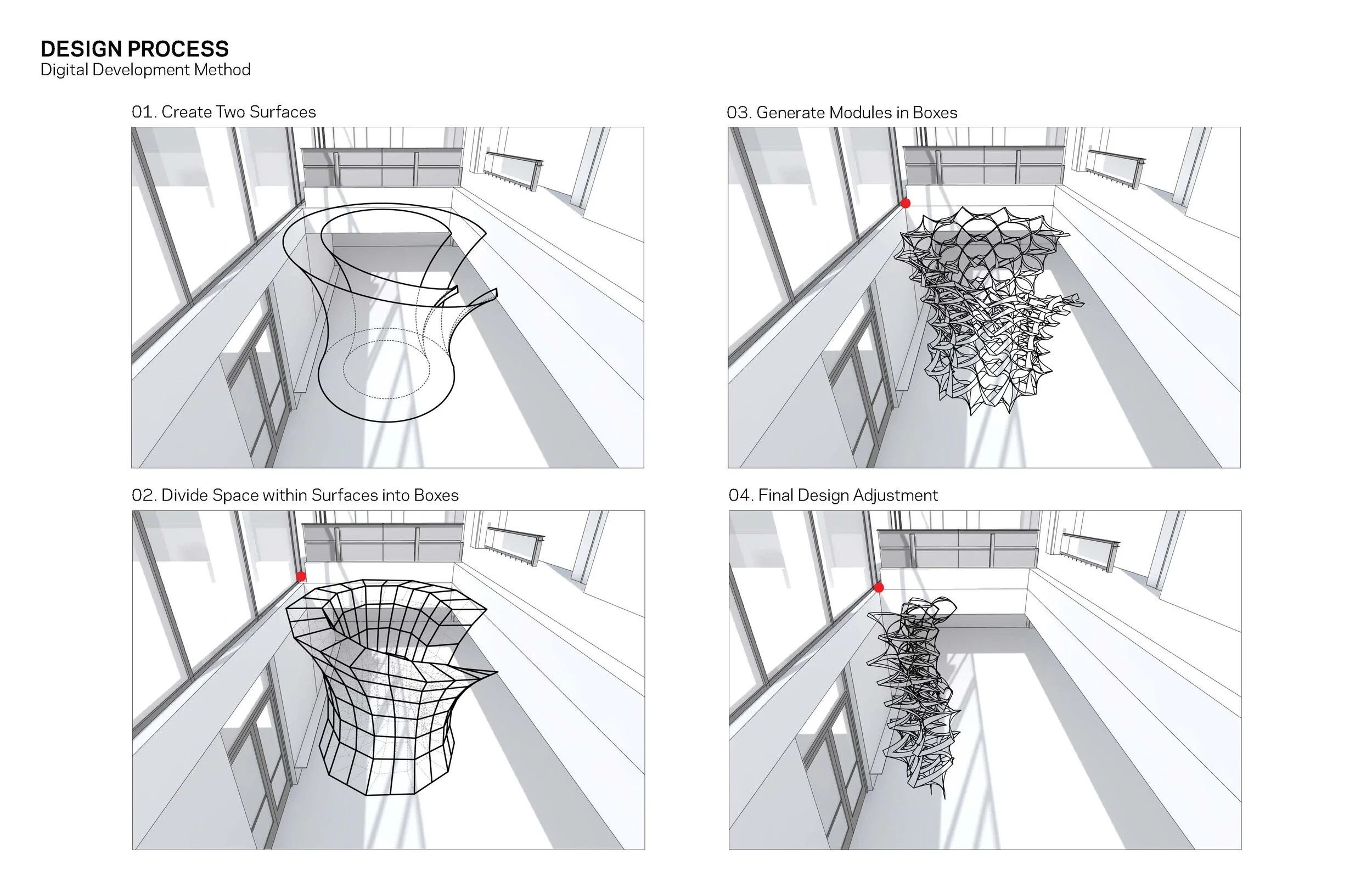
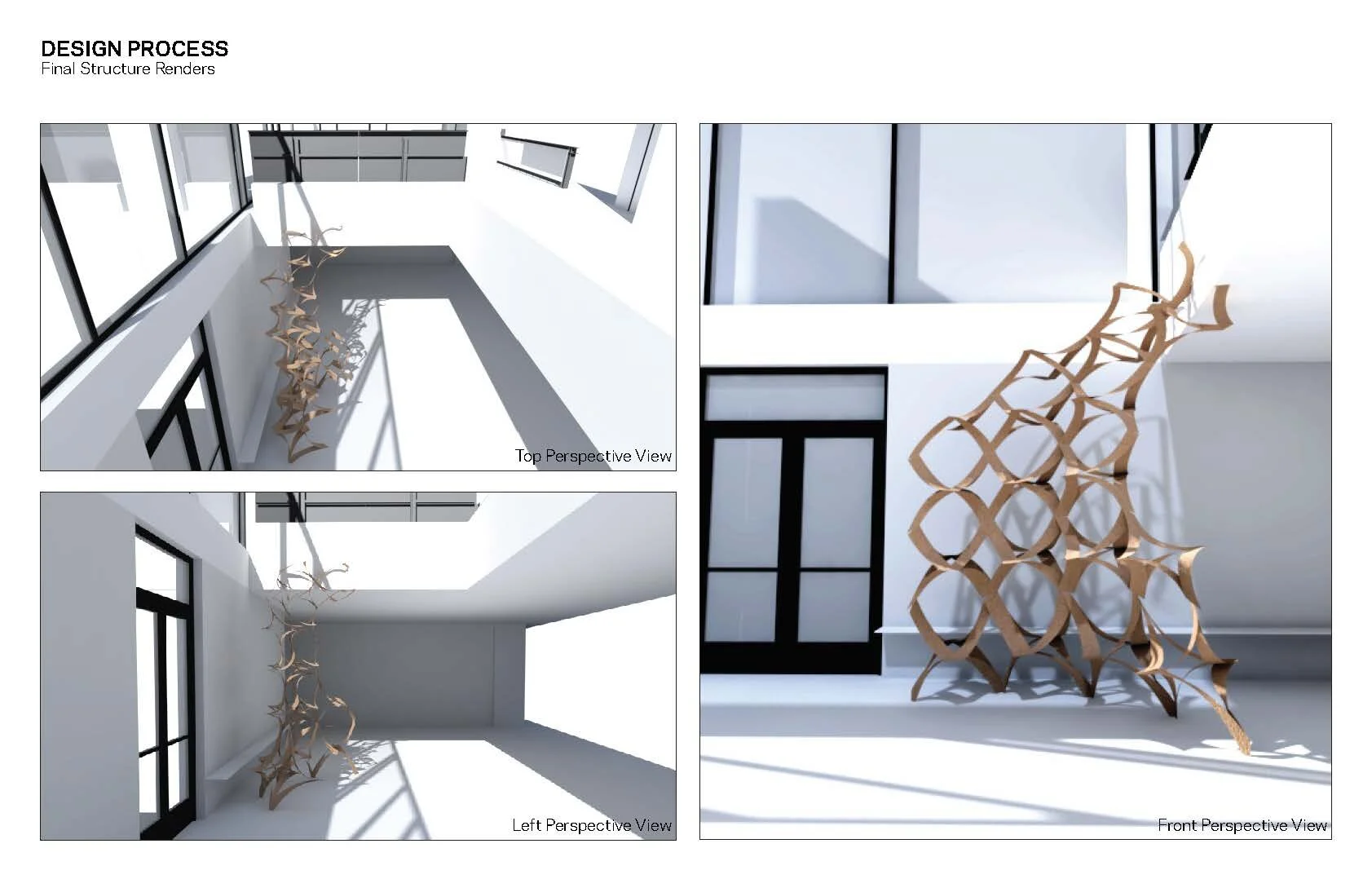
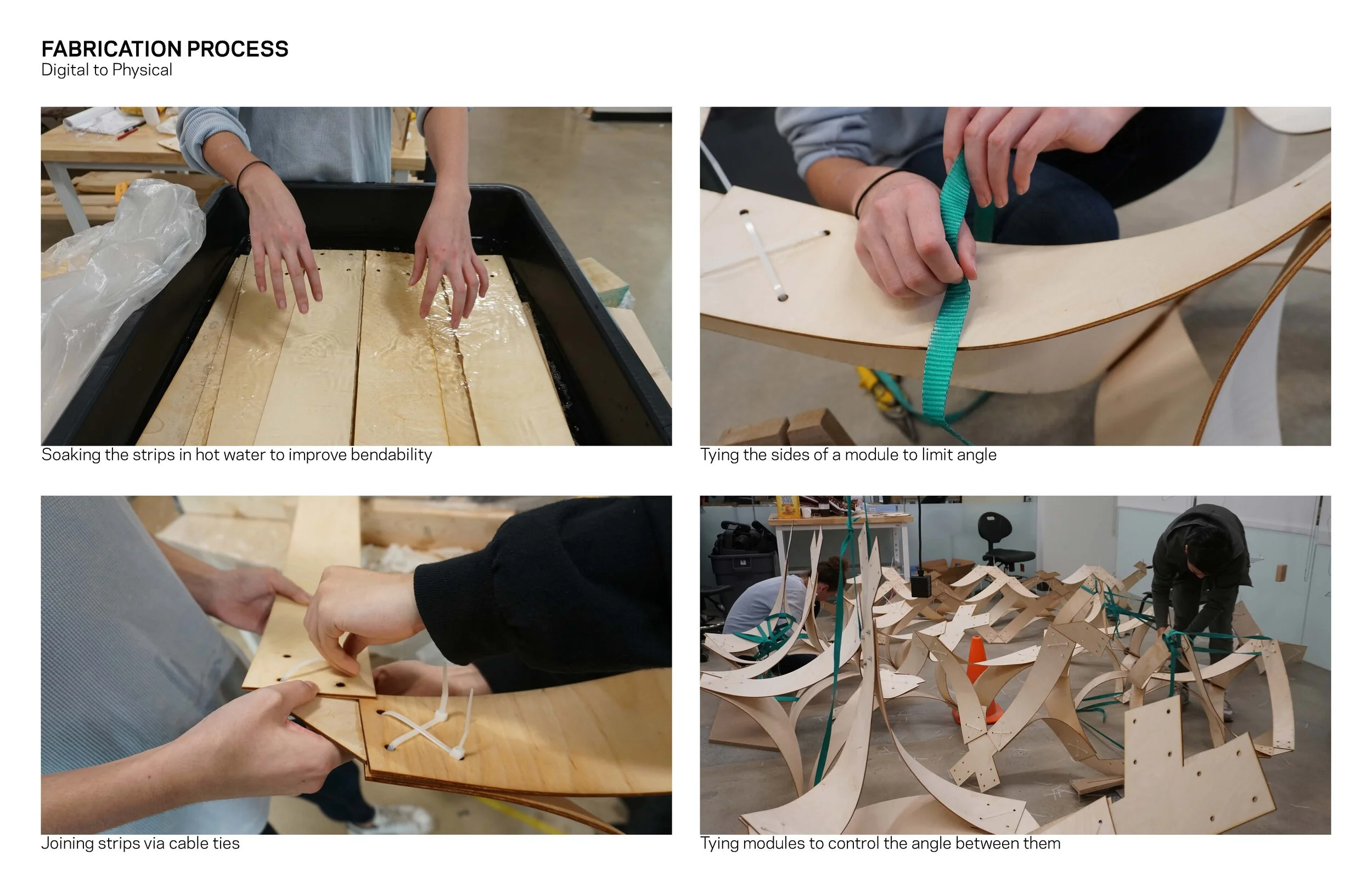
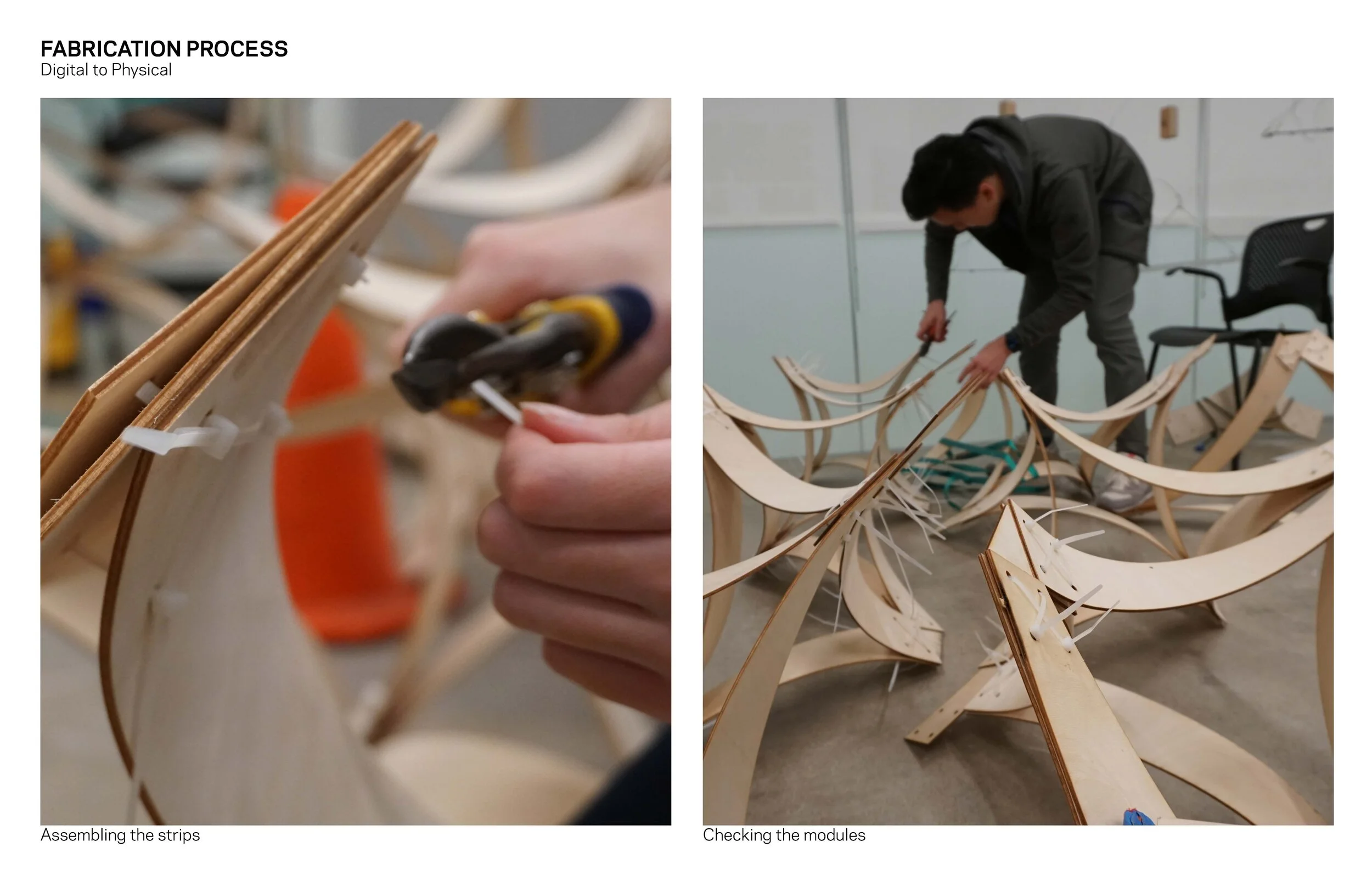
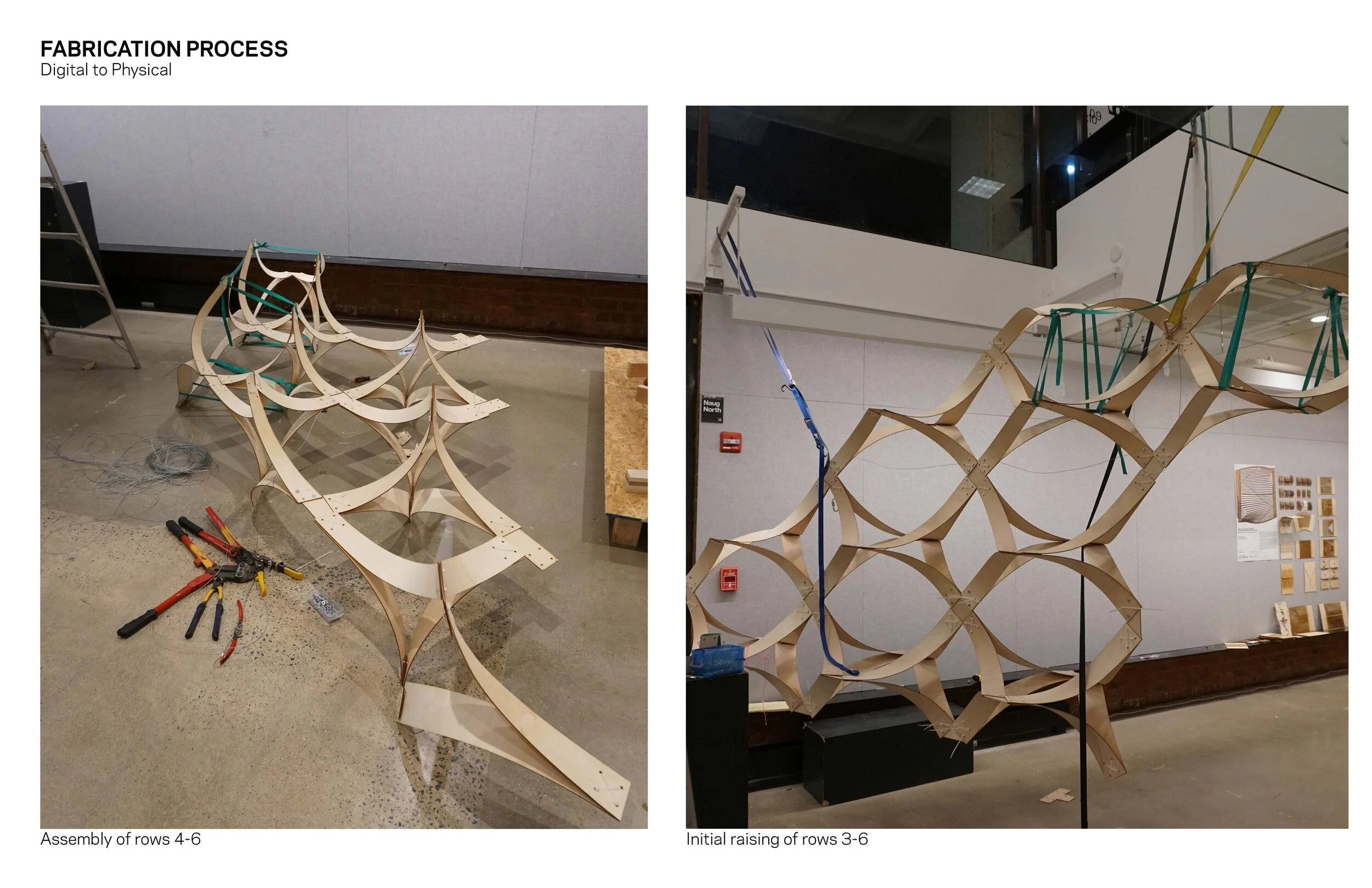
The methods used in the project’s conception have the potential for a future facade, curtain wall, or screen application within architectural design. The structure served as a platform to develop our skills in digital fabrication techniques, while also exploring and experimenting with the material properties of wood. Our iterative physical and digital modeling processes led us to constantly be integrating new findings in such a way that the design and fabrication development built upon one another. Throughout the design process, we never worked entirely within one medium. Rather, the development of our structure was a continuous and integrated process that involved both digital and physical experimentation.